
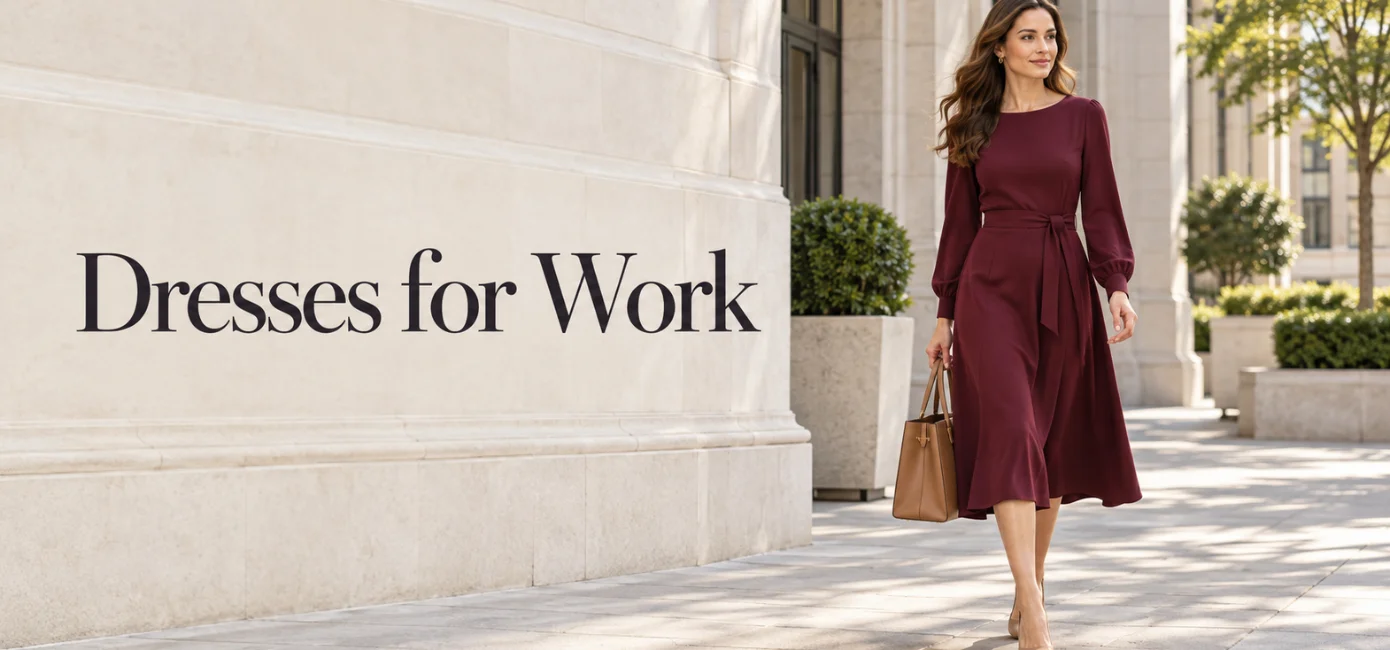
Finding a professional dress should make weekday mornings easier, not create another decision. The best dresses for work combine appropriate coverage, comfortable fabric, and a silhouette that suits your workplace. Your ideal choice should also be versatile enough for meetings, commuting, and changing temperatures.
A good office dress should feel comfortable while sitting, walking, commuting, and attending meetings. Shirts, sheaths, wraps, A-lines, and midi styles cover most professional settings. Start with your office dress code, then compare fabric, fit, length, and layering options before buying.
Work Dress Styles at a Glance
| Dress style | Best for | Main advantage | Possible drawback |
|---|---|---|---|
| Shirt dress | Business casual offices | Polished but relaxed | Some fabrics wrinkle easily. |
| Sheath dress | Business professional settings | Sharp, structured appearance | A close fit can restrict movement. |
| A-line dress | Most office environments | Comfortable and easy to layer | Very full skirts can feel less formal |
| Wrap dress | Business casual and smart offices | Adjustable waist and flexible fit | The neckline may need checking. |
| Midi dress | Modern professional wardrobes | Useful coverage and versatility | Length can affect proportions. |
| Knit dress | Casual or creative offices | Comfortable for long days | Thin clinging. May cling |
| Fit-and-flare dress | Business casual workplaces | Defined waist with easy movement | Some versions look too occasion-focused. |
For most women, a midi shirt dress or simple A-line dress is the safest first purchase. Both can move between business casual and slightly dressier settings. Add a blazer, cardigan, loafers, or pumps when greater formality is needed.
How to Choose Dresses for Work by Office Dress Code
Your workplace should guide the dress before trends or personal preferences. A law office may expect more structure than a creative agency. Hybrid workplaces can also have different expectations for client days and routine desk days.
When you’re new to a company, begin slightly more polished than necessary. Watch how managers and client-facing colleagues dress during the first few weeks. You can adjust once you understand the workplace’s unwritten rules.
Business Professional
Business professional environments usually favor restrained colors, structured fabrics, and simple silhouettes. Sheath, tailored A-line, and conservative midi styles are dependable choices. Navy, charcoal, black, burgundy, and muted neutrals are easy to repeat.
Look closely at neckline, sleeve length, and hem placement before buying. The dress should remain comfortable and covered when you sit or reach. A blazer can add structure without requiring a completely different outfit.
Business Casual
Business casual offers more flexibility in color, texture, and silhouette. Shirt dresses, wrap styles, softer midis, and subtle prints usually fit this setting well. You can also experiment with knit dresses when the fabric holds its shape.
Accessories can change the same dress considerably. Loafers and a cardigan create a relaxed office combination. Structured shoes and a blazer make the same piece suitable for an important meeting.
Creative or Relaxed Offices
Creative workplaces often allow stronger colors, modern proportions, and more expressive details. A printed midi, modern shift, or textured knit can work without looking careless. The key remains intentional styling rather than formality alone.
Keep at least one part of the outfit structured. That might be a tailored jacket, polished shoes, or a defined handbag. This approach helps expressive clothing retain a professional finish.
7 Office Dress Styles Worth Considering
1. Shirt Dresses
A shirt dress borrows familiar details from button-down shirts. Collars, cuffs, buttons, and belts create structure without feeling stiff. This makes the style work well in offices with flexible dress codes. Cotton poplin works well during warmer months, although it can wrinkle.
Blended fabrics may require less maintenance during long workdays. Choose enough room through the shoulders for comfortable movement.
2. Sheath Dresses
A sheath dress creates one of the sharpest office silhouettes. Its clean shape works especially well for presentations, interviews, and formal workplaces. Dark solids also pair easily with blazers and understated jewelry.
Comfort depends heavily on fit and fabric stretch. You should be able to sit naturally without pulling across the hips. Don’t buy a smaller size just to create a closer silhouette.
3. A-Line Dresses
A-line dresses fit closer through the upper body, then widen toward the hem. The shape allows easier movement than many fitted styles. It also works across a wide range of office dress codes. Choose moderate skirt volume for professional settings.
Excessively full skirts can make the dress feel more suited to social occasions. A clean neckline and simple fabric keep the look office-ready.
4. Wrap Dresses
Wrap dresses work well when you want adjustable definition at the waist. Their shape can accommodate small fit changes better than rigid tailoring. They also move easily between routine office days and dinner plans. Check the neckline while sitting and moving before wearing one to work.
Some wrap designs open more than expected during normal movement. A small snap or camisole can provide additional coverage when needed.
5. Midi Dresses
Midi lengths remain practical because they offer coverage without the commitment of a floor-length silhouette. They work particularly well with boots, loafers, pumps, and flats. A defined waist can help longer lengths look balanced.
Your height does not automatically determine whether a midi works. Hem position and proportion matter more than a fixed rule. Try different lengths until the dress works with your usual office shoes.
6. Knit Dresses
A knit dress can provide welcome comfort during cooler months. Ribbed or compact knits usually appear more polished than thin jersey. A substantial fabric also tends to retain its shape better. Check the dress under natural light before wearing it to the office.
Thin fabric can become more transparent or revealing than fitting-room lighting suggests. Smooth underlayers can also improve the finished appearance.
7. Fit-and-Flare Dresses
Fit-and-flare dresses define the waist while allowing movement through the skirt. They can be useful for teachers, presenters, and anyone moving frequently during the day. Simple versions can also work well in business-casual settings.
Avoid excessive ruffles, party fabrics, or dramatic skirt volume for conservative offices. Choose solid colors, restrained patterns, or subtle texture instead. This keeps the silhouette polished rather than event-focused.
The Best Fabrics for an Office Dress
Fabric changes how professional a dress looks and how comfortable it feels after several hours. Ponte, compact knit, cotton poplin, crepe, and wool blends are good places to start. Each provides a different balance of structure, movement, and seasonal comfort.
Wrinkle resistance matters if you commute or sit for extended periods. Test the fabric by gently squeezing a small section in your hand. If deep creases remain immediately, the dress may need more maintenance.
Warm offices also require breathable choices. Cotton blends and lightweight woven fabrics can make commuting in summer easier. During winter, wool blends and substantial knits provide warmth without excessive layering.
How Should a Work Dress Fit?
A professional dress should follow your shape without restricting normal movement. You should be able to sit, walk, reach, and climb stairs comfortably. Pulling seams and constantly adjusting fabric usually signal a poor fit. Check the shoulders first because they are difficult to alter well. Next, examine the bust, waist, hips, and hem while standing and sitting.
Tailoring can refine small fit issues when the overall shape already works. Try the dress with the undergarments you plan to wear. Different bras and shapewear can change how the fabric sits on your body. Testing the complete combination prevents surprises on a busy morning.
How to Style an Office Dress Without Buying More Clothes
Layering can make one dress useful through several seasons. A blazer adds formality, while a cardigan creates a softer business-casual look. A fitted turtleneck can also extend some sleeveless dresses into colder months.
Color coordination becomes easier when your wardrobe shares a limited palette. Black, navy, camel, cream, gray, and brown can create many repeatable combinations. StudioStylee’s white top outfit guide offers more ideas for building versatile professional separates.
Accessories should support the dress, not compete with it. Simple jewelry, a structured bag, or understated eyewear can create enough detail. The site’s rectangle glasses guide covers frame choices that also suit professional wardrobes.
What Shoes Look Best With Office Dresses?
Loafers, pointed flats, pumps, ankle boots, and restrained ballet flats can all work. Your office rules and the dress silhouette should decide the final choice. Comfort also matters if your commute involves a lot of walking. Narrow shoes often create a sharper finish with tailored styles. Chunkier footwear can balance relaxed knits or longer midi dresses.
For more footwear combinations, see StudioStylee’s fashion shoes guide. Keep practical needs in mind throughout the day. Slippery soles, unstable heels, or painful toe boxes quickly become distracting. A polished shoe is not useful when you cannot walk comfortably.
Colors and Prints That Work in Professional Settings
Neutral colors make repeat styling easier, but they are not mandatory. Deep green, burgundy, muted blue, rust, and soft pastels can still look professional. The best choice depends on your workplace and how you style it. Prints can also work when their scale feels controlled.
Pinstripes, small florals, geometric patterns, and subtle checks provide interest without dominating the outfit. Loud novelty prints may suit creative offices better than conservative settings. Consider how the color works with your existing shoes and layers. A dress that matches three jackets offers more value than one requiring new accessories. This simple test can prevent expensive wardrobe gaps.
Common Work-Dress Mistakes to Avoid

Fit problems cause more trouble than most trend choices. A dress can look polished on a hanger but fail during an eight-hour day. Always test sitting, walking, bending, and reaching before removing the tags. Another mistake is ignoring fabric maintenance.
A dry-clean-only dress can be inconvenient if you wear it every week. Check washing instructions before deciding whether a piece deserves regular rotation. Avoid buying solely for one specific outfit combination. The most useful office pieces should work with several shoes, jackets, and accessories. Versatility reduces morning decisions and increases each purchase’s value.
Our Verdict: Which Work Dress Should You Buy First?
Start with a solid-colored midi shirt dress if your office is business casual. It combines structure, comfortable movement, and straightforward styling. You can wear it with flats, loafers, boots, or pumps across several seasons. For a more conservative workplace, choose a tailored A-line or sheath instead.
Look for moderate stretch and enough room to sit comfortably. Navy, charcoal, and other dark neutrals are the easiest place to start. Comfort should never come at the expense of professional expectations. Professional clothing also doesn’t need to feel stiff or restrictive. The strongest choice fits your body, workplace, schedule, and existing wardrobe.
Frequently Asked Questions About Dresses for Work
What dresses are appropriate for work?
Appropriate styles usually include shirt, sheath, A-line, wrap, and midi dresses. The right choice depends on your company’s dress code and daily responsibilities. Coverage, fabric, fit, and movement matter more than one universal silhouette.
What length should an office dress be?
Knee and midi lengths are dependable choices for many American workplaces. Shorter dresses may work in relaxed offices when the overall outfit remains balanced. Always judge length while sitting because the hem will rise.
Can you wear a sleeveless dress to work?
Yes, many workplaces permit sleeveless dresses. Wider shoulder coverage and a restrained neckline usually appear more professional. Keep a blazer or cardigan nearby when your office is conservative or heavily air-conditioned.
Are floral dresses professional enough for an office?
Small or restrained floral prints can fit many business-casual workplaces. Simple accessories help keep the finished outfit polished. Larger or brighter prints may suit creative environments better.
What is the most versatile work dress?
A knee-length or midi A-line dress in a solid neutral color is difficult to beat. It works with several jacket and shoe styles. A shirt dress is another strong option when your workplace is less formal.
How many office dresses do you need?
There is no fixed number because schedules and laundry routines vary. Three to five adaptable dresses can create a useful starting rotation. Choosing different fabrics and silhouettes makes that small wardrobe more flexible.
Build a Work Wardrobe Around Repeatable Pieces
The smartest professional wardrobe is built around clothing you can wear repeatedly. Look for comfort, useful fabrics, reliable fit, and compatibility with pieces you already own. Those qualities matter more than chasing every new office trend.
Start with one dependable dress that matches your most common workday. Add another silhouette only after you understand what your wardrobe is missing. That approach creates more outfits while limiting unnecessary purchases.