
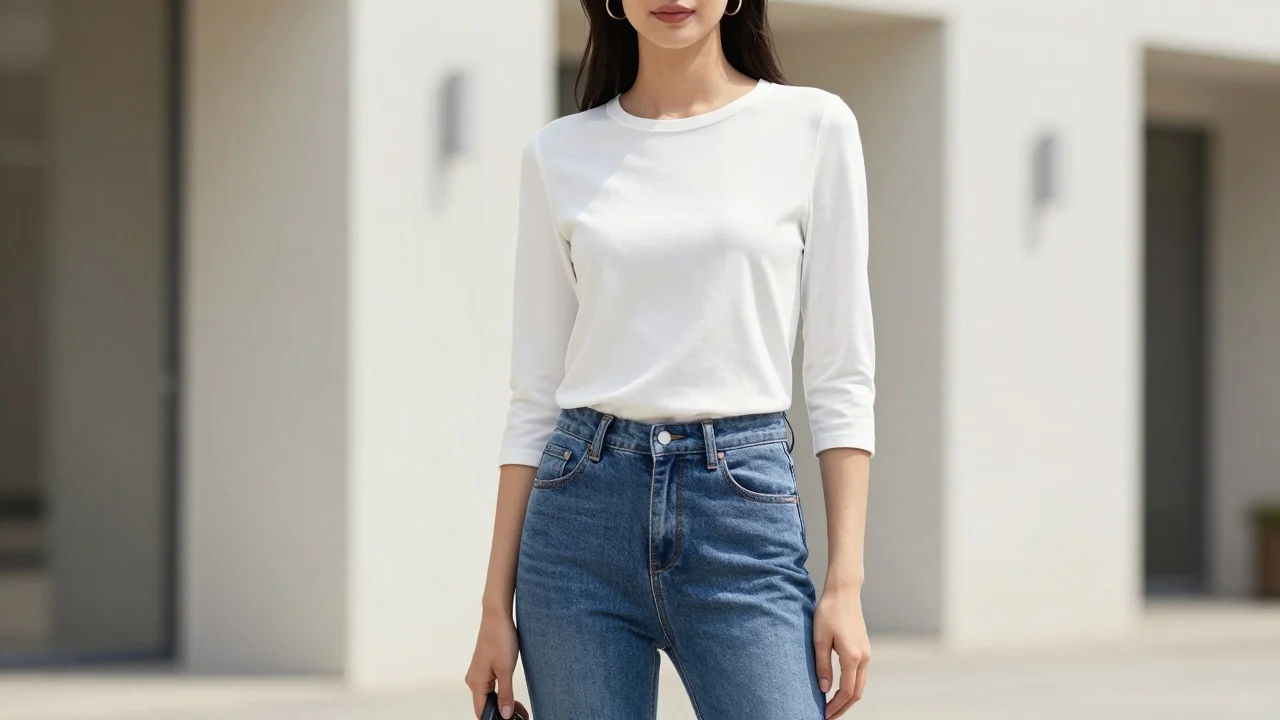
A white top earns its closet space because it can move between casual, office, and dressier outfits without much effort. The key is choosing the right silhouette and fabric instead of treating every white shirt, tee, tank, or blouse as interchangeable. Once the proportions work, denim, tailored pants, skirts, and seasonal layers become much easier to coordinate.
Quick answer: Start with a shape that fits the occasion, then balance it with the opposite volume below. Pair fitted tees or tanks with relaxed denim or pants, and pair billowy blouses with straighter bottoms. Use skin-tone undergarments under thin fabric, add texture through shoes or jewelry, and keep the palette simple.
Quick Comparison: Which Style Should You Choose?
| Style | Best for | Pros | Cons |
|---|---|---|---|
| Fitted cotton tee | Everyday outfits | Easy to layer; works with most bottoms | Thin jersey can become sheer |
| Ribbed tank | Warm weather and layering | Clean shape; works under jackets | Strap and bra placement matter |
| Cotton-poplin button-up | Work, travel, smart casual | Polished; easy to tuck or layer | Crisp fabrics may wrinkle |
| Billowy blouse | Brunch, dates, dressier days | Adds movement and visual detail | Can overwhelm very loose bottoms |
| Peplum or structured blouse | Dinners and polished outfits | Defines the waist | Less adaptable for relaxed looks |
| Knit or long-sleeve shirt | Fall and winter | Adds texture and warmth | Heavy knits can add bulk |
If you are buying one piece first, choose a midweight cotton-poplin shirt or a substantial cotton tee in a relaxed, rather than oversized, cut. It can cover casual and office outfits, layer beneath jackets, and usually offers better opacity than tissue-thin jersey. Add a fitted tank or decorative blouse later once you know which occasions your wardrobe still needs to cover.
How to Choose a White Top That Looks Better in Real Life
Start with proportion because color cannot rescue a poor silhouette. A fitted upper half usually works best with straight, wide-leg, or relaxed bottoms, while a loose blouse benefits from a cleaner line below. Check the shoulder, bust, hem length, and arm opening before judging whether the piece flatters you.
Current U.S. assortments show how broad the category has become. H&M currently carries white options across tees, long sleeves, tanks, peplums, halters, bodysuits, knits, and corset-inspired shapes, while Zara lists cotton, satin, peplum, asymmetric, knit, and cropped designs. That variety makes silhouette, opacity, and intended use more useful shopping filters than color alone.
Fabric should match the job you expect the garment to perform. Poplin gives button-ups more structure, linen suits hot weather, ribbed cotton follows the body, and lightweight voile or eyelet creates a softer appearance. Hold thin fabrics toward a bright window before buying because fitting-room lighting can hide transparency.
Undergarments also change the finished result. A smooth bra close to your skin tone generally shows less beneath lightweight white fabric than a bright white bra, while flat seams reduce visible outlines. If you prefer a deliberately visible bralette or camisole, treat it as part of the outfit rather than trying to disguise it.
9 Outfit Formulas That Work Across U.S. Seasons
- Fitted tee + relaxed blue jeans + ballet flats. The contrast between a close-cut upper half and looser denim keeps this combination balanced. Add a leather belt and small shoulder bag for more definition.
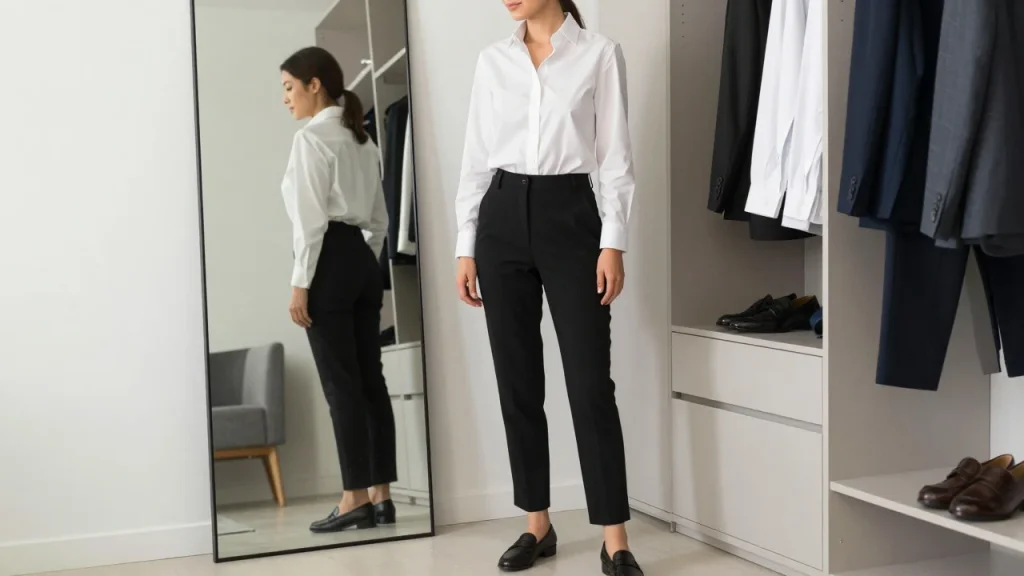
- Crisp button-up + dark denim + loafers. This works for casual offices, dinner, or a polished weekend look without requiring dress pants. StudioStylee’s dark wash jeans outfit guide offers more ideas for choosing shoes and layers around deeper indigo denim.
- Sleeveless tank + wide-leg pants + flat sandals. Keep the tank relatively fitted so the wider pants remain the strongest shape. A structured tote or narrow belt prevents the outfit from feeling too loose.
- Cotton blouse + black tailored pants + pointed shoes. Black creates clear contrast and makes romantic sleeves or textured fabric feel more grown-up. Swap the heels for loafers when comfort matters more than formality.
- Tucked tee + pleated skirt + sneakers. This formula works especially well for sporty or preppy styling because the simple upper half does not compete with the skirt. For more skirt-specific combinations, see StudioStylee’s white tennis skirt styling guide.
- Billowy blouse + straight-leg jeans + simple flats. Straight denim gives the volume at the shoulders and sleeves enough visual space. Keep jewelry restrained if the neckline already includes lace, embroidery, ties, or ruffles.
- Button-up + Bermuda shorts + leather sandals. A longer short balances the formality of crisp shirting while remaining practical for warm weather. Roll the sleeves once or twice if the shirt feels too office-focused.
- Fitted knit + satin midi skirt + low heel. The matte-to-shine contrast gives an otherwise neutral outfit more depth. Choose a smooth knit without bulky ribbing when you want the skirt to remain the focal point.
- Crewneck tee + blazer + straight pants + sneakers. This is one of the easiest formulas for early fall, air-conditioned offices, and travel days. Remove the blazer when temperatures rise without changing the structure of the outfit.
How to Keep the Look Current in 2026
Current fashion coverage has moved beyond the plain crewneck as the only useful option. Vogue and Harper’s Bazaar have recently highlighted billowy blouses, broderie anglaise, airy poplin, linen, fitted tanks, colorful pants, skirts, and high-contrast black-and-white combinations. The common thread is not one specific trend but stronger attention to texture and proportion.
You can use that idea without rebuilding your closet each season. Keep the clothing neutral, then introduce interest through a cobalt skirt, red pants, dark denim, silver jewelry, or a textured bag. StudioStylee’s fashion section can provide more outfit inspiration when you want to extend the same pieces into different aesthetics.
Care, Opacity, and Small Details That Matter
Read the care label before choosing a wash cycle because cotton, linen, knits, and blended fabrics behave differently. Treat makeup, deodorant, and food marks early, and avoid high heat when the label warns against it because heat can set some stains or change the garment’s shape. StudioStylee’s shirt care and styling guide has more guidance on washing, drying, steaming, and storage.
A small amount of maintenance also keeps white clothing from looking tired faster than necessary. Separate pieces that transfer dye, check collars and cuffs before washing, and store clean garments rather than leaving body oils on the fabric for months. Replace harsh stain experiments with the product and temperature recommendations on the garment label.
Your Next Step
Choose the white shirt, blouse, tank, or tee in your closet that you wear least, then build three outfits around it before buying another one. Test it once with denim, once with tailored or wide-leg pants, and once with a skirt so you can see which proportions work best. For more women’s fashion ideas, continue through StudioStylee’s womenswear hub and use the formulas that fit your existing wardrobe.
Frequently Asked Questions
Blue or dark-wash jeans are the easiest starting point because denim supplies clear color contrast without becoming difficult to coordinate. Black pants create a sharper office or evening outfit, while wide-leg neutral pants produce a softer look. Midi skirts, pleated skirts, Bermuda shorts, and colored pants also work when their volume balances the upper half.
Choose a denser weave first because undergarments cannot make transparent fabric opaque. A smooth bra or camisole close to your skin tone usually creates less contrast under thin material than bright white lingerie. Check the garment in daylight before leaving home because strong natural light often reveals details that indoor lighting hides.
Yes, there is no practical reason to retire white clothing when summer ends. Fall styling works well with black, navy, camel, gray, leather, denim, and heavier knits, while winter outfits can use cream and bright white for contrast. Vogue’s 2026 coverage also treats white as a year-round option rather than a color limited to summer.
Linen and lightweight cotton are strong choices because they create less heavy layering around the body than dense knits. Cotton poplin gives more structure, while voile and similar light woven fabrics create a softer, airier effect. Current summer styling coverage from Harper’s Bazaar has also emphasized linen, cotton poplin, broderie, and lightweight fabrics for warm-weather dressing.