

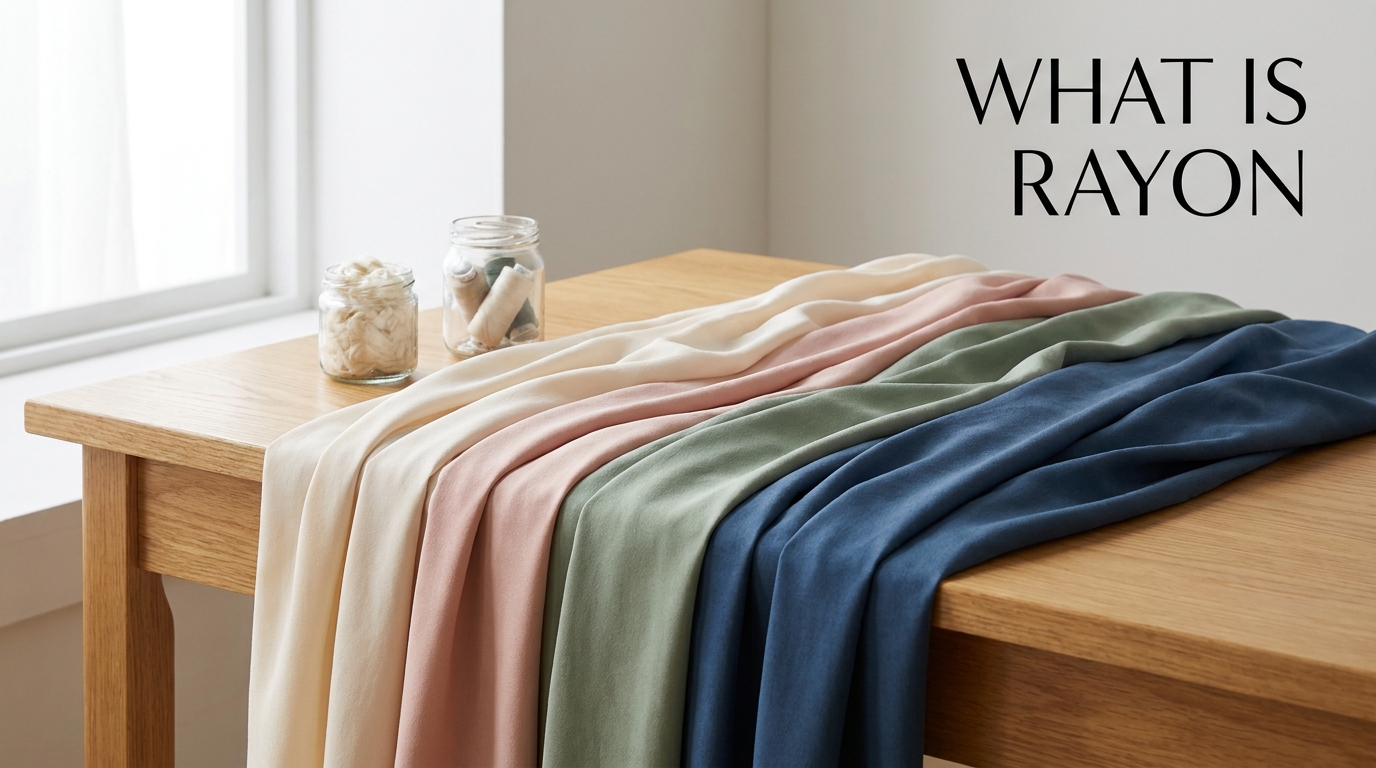
If you have checked a dress, blouse, shirt, or pair of pants and wondered what is rayon, the label can seem confusing. The material starts with plant cellulose and undergoes manufacturing steps that convert it into a new textile fiber. That combination explains why it can feel natural while still being classified as manufactured.
Rayon is a manufactured fiber made from regenerated plant cellulose, usually wood pulp. The cellulose is dissolved and reformed into fine fibers, so the finished textile differs from cotton and petroleum-based polyester. It is valued for softness, absorbency, fluid drape, and cool comfort.
Key Facts at a Glance
| Feature | What to Know |
|---|---|
| Fiber category | Manufactured regenerated cellulosic fiber |
| Common raw material | Wood pulp; other plant cellulose can also be used |
| Typical feel | Soft, smooth, light, and fluid |
| Breathability | Generally comfortable in warm weather because it absorbs moisture |
| Common uses | Dresses, blouses, shirts, skirts, pants, linings, and home textiles |
| Main weakness | Standard viscose can lose strength when wet |
| Related names | Viscose, modal, lyocell, and cupro are related cellulosic fibers |
| Care | Follow the garment label; gentle washing or dry cleaning may be required |
| U.S. label issue | Bamboo-derived manufactured fiber should not simply be labeled “bamboo” |
Key Takeaways
- The fiber begins with plant-based cellulose but is chemically processed into a manufactured textile.
- It is popular for clothing because it feels soft, hangs smoothly, and handles warm weather well.
- Viscose is closely associated with the same fiber family, while modal and lyocell use related but distinct production methods.
- Standard versions may become weaker when wet, making the care label more important than assumptions about the fabric.
- Environmental performance varies with forest sourcing, chemical management, manufacturing technology, and the producer.
What Is Rayon Made From?
The starting material is cellulose, a structural substance found in plants. Commercial production commonly uses purified wood pulp from trees such as eucalyptus, spruce, or pine, although other plant sources can also supply cellulose. The Council of Fashion Designers of America describes the material as a manufactured regenerated cellulosic fiber derived mainly from wood pulp.
Calling the finished textile “natural” can therefore be misleading. Cotton fibers can be cleaned and spun after harvesting, while regenerated cellulose must first be dissolved and converted into a form that can be made into new filaments. That is why you will often see the material described as semi-synthetic or regenerated rather than placed neatly beside cotton or polyester.
A simplified production sequence looks like this:
- Cellulose is extracted and purified from plant material.
- The cellulose is prepared or dissolved by chemical means.
- The resulting solution is pushed through tiny openings to form filaments.
- Those filaments are regenerated, washed, processed, and made into yarn for fabric.
Rayon, Viscose, Modal, and Lyocell: What Changes?
Viscose is strongly associated with this fiber family and is the version shoppers encounter most often. Modal and lyocell are also regenerated cellulosic fibers, but their production methods and performance can differ. In the United States, fiber terminology matters because the Federal Trade Commission regulates disclosures about textile fibers.
| Fiber name | General relationship | Common characteristics |
|---|---|---|
| Viscose | Widely used regenerated cellulose process | Soft, fluid, absorbent, may be delicate when wet |
| Modal | Related regenerated cellulosic fiber | Soft feel, often used in underwear, loungewear, and blends |
| Lyocell | Regenerated cellulose made through a different solvent process | Smooth, absorbent, often selected for improved processing and performance |
| Cupro | Regenerated cellulosic fiber commonly associated with cotton linters | Silky feel and fluid drape |
The names can still vary between markets and product descriptions. A U.S. shopper may encounter different terminology when browsing imported clothing, so reading the full fiber content label is useful. Focus on the fiber percentage and care instructions rather than relying solely on a product’s marketing name.
Feel, Breathability, and Everyday Comfort
This material is known for its fluid drape, which is one reason it appears so often in dresses, skirts, blouses, and relaxed pants. It can feel smooth against the skin and usually absorbs moisture more readily than polyester. Those properties can make lightweight constructions comfortable during hot American summers.
The finished experience still depends on fabric construction, weight, finishing, and blends. A light woven dress will behave differently from a thick knit containing the same cellulosic fiber. If warm-weather comfort is your priority, compare fabric weight and fit as carefully as the fiber name itself.
For another warm-weather option, StudioStylee’s guide to linen shirts and summer comfort explains how linen behaves in hot conditions. The site’s broader shirt fabric and care guide can also help you match materials with different seasons. Comparing fabrics by use often tells you more than choosing one material for every outfit.
Pros and Cons at a Glance
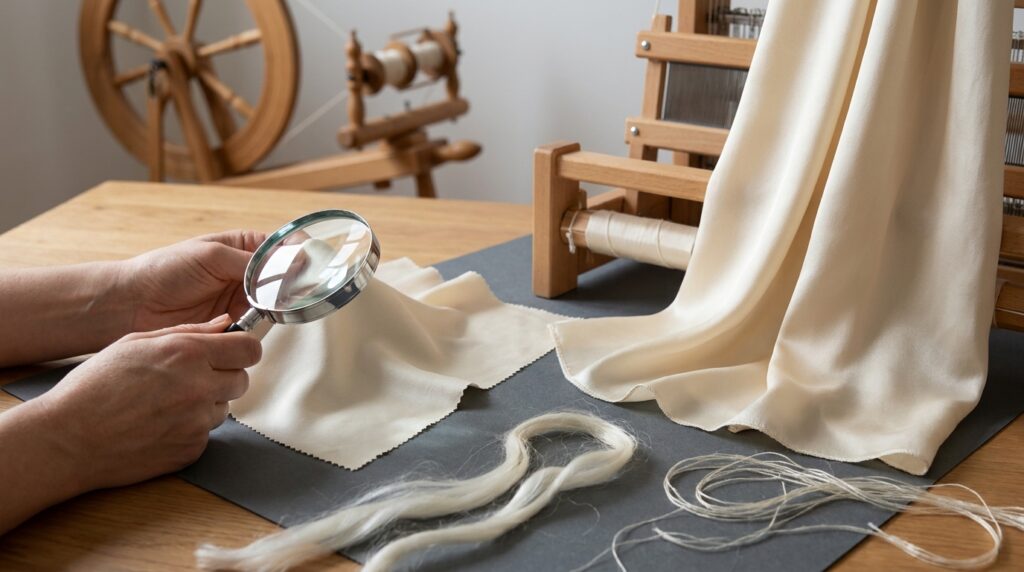
The main appeal is comfort combined with a polished drape. The trade-off is that some versions require gentler laundering and may wrinkle, shrink, or lose shape if handled improperly. According to the University of Georgia’s fiber-care guidance, conventional versions can become weaker when wet and may shrink or stretch unless treated.
Common advantages
- Soft, smooth hand feel.
- Attractive drape for flowing garments.
- Good absorbency.
- Comfortable performance in many warm-weather clothes.
- Takes color well.
- Useful in both woven and knitted fabrics.
Common drawbacks
- Some versions lose strength when wet.
- Poor care can contribute to shrinking or stretching.
- Wrinkling can be noticeable.
- Garment care requirements vary widely.
- Conventional viscose production can create environmental and worker-safety concerns.
Compared With Cotton and Polyester
No fiber wins every category, so the better choice depends on the garment and how you plan to wear it. Cotton is a natural cellulosic fiber, while polyester is a synthetic polymer. Regenerated cellulose sits between those familiar categories because its feedstock comes from plants, but the fiber itself is manufactured.
| Feature | Rayon | Cotton | Polyester |
|---|---|---|---|
| Raw-material origin | Plant cellulose | Cotton plant | Synthetic polymer feedstock |
| Moisture absorption | Good | Good | Lower |
| Drape | Fluid | Depends on weave and weight | Varies widely |
| Wrinkling | Can wrinkle | Can wrinkle | Usually more wrinkle-resistant |
| Wet handling | Can require extra care | Often strong and practical | Generally durable |
| Typical use | Dresses, blouses, skirts, flowing clothing | Tees, shirts, denim, basics | Sportswear, outerwear, blends |
Fabric selection also affects how an outfit looks, not just how it performs. StudioStylee’s white-top outfit guide shows how shape, fabric weight, and opacity can transform a simple wardrobe piece. Those details matter when comparing a fluid blouse with a crisp cotton shirt or a structured synthetic top.
How to Wash It Without Ruining the Drape
Start with the sewn-in care label because construction and finishing can change what a garment can tolerate. The University of Georgia notes that cellulosic-manufactured fabrics may require careful handling during laundering because wet fibers can be weaker. Some garments are washable, while others may specify hand washing, a delicate cycle, or professional cleaning.
For washable pieces, a cautious routine is usually sensible:
- Use cool or cold water unless the label says otherwise.
- Choose a gentle cycle or hand wash delicate garments.
- Use a mild detergent.
- Avoid aggressive twisting or wringing while the item is wet.
- Reshape the garment before drying if the label permits.
- Keep high dryer heat away from pieces prone to shrinking.
- Use an appropriate iron temperature and protect delicate surfaces.
Do not assume every garment with the same fiber content needs identical treatment. Blends, dyes, finishes, linings, and garment construction can all change the recommended method. Following the manufacturer’s care instructions is the safest way to preserve shape, color, and surface texture.
What U.S. Clothing Labels Can Tell You
American shoppers should pay attention to the generic fiber names and percentages printed on clothing labels. FTC guidance requires covered textile products to disclose their fiber content by name, which helps shoppers compare products more accurately. That rule becomes especially useful when marketing language makes plant-derived fabrics sound simpler than they are.
Bamboo is a good example. The FTC explains that textiles manufactured as rayon or viscose from bamboo cellulose should be described accordingly rather than presented as ordinary bamboo fiber. The original plant source does not turn the finished manufactured fiber back into raw bamboo.
A practical shopping habit is to read beyond the large product title and inspect the ingredients list. Labels such as “100%,” “blend,” or a list of several fibers can give you clues about comfort and care. Pair that information with the care label before deciding whether a garment suits your routine.
Is It a Sustainable Fabric?
There is no useful yes-or-no answer because environmental impact depends on how the cellulose is sourced and processed. Conventional viscose manufacturing has historically used carbon disulfide, and government health sources document its role in the process. Published toxicological profiles for carbon disulfide also describe the occupational and environmental exposures associated with its industrial use.
Forest sourcing matters as well, since cellulose typically comes from trees. Responsible forestry, chemical recovery, lower-emission processes, traceability, and credible certifications can improve the picture. A plant-derived raw material alone does not prove that the finished garment has a low environmental impact.
If sustainability matters to you, look for information about the fiber producer instead of relying on broad terms such as “eco” or plant-based.” Check whether the brand identifies the manufacturing process, sourcing standard, or recognized certification. Specific supply-chain information is more useful than an unsupported green claim.
How to Decide Whether It Belongs in Your Closet
Start with the job you want the garment to perform. A soft blouse, draped summer dress, flowing skirt, or relaxed pair of pants may benefit from this fiber’s movement and absorbency. A heavily used item you want to machine-wash and tumble-dry every week may require closer attention to the exact fabric and care instructions.
Before buying, check these details.
- Fiber percentage and any blended materials.
- Whether the fabric is woven or knitted.
- Opacity in bright light.
- Stretch and recovery.
- Care-label requirements.
- Whether the piece feels comfortable against your skin.
- Sourcing details if environmental impact matters to you.
For active outfits, fiber choice has a different set of priorities. StudioStylee’s Pilates outfit guide discusses breathability, stretch, support, and durability in clothing designed for movement. You can also browse the site’s Fashion section for more guides built around fit, fabric, styling, and wardrobe use.
Make the Fabric Label Work for You
Understanding a clothing label makes shopping easier because you can connect fiber content with comfort, appearance, and maintenance. Check the composition, feel the fabric, examine its weight, and read the care instructions before you buy. Those few steps help you choose clothing that fits both your style and the amount of care you want to give it.
Frequently Asked Questions
Neither material is automatically better because they perform differently. Cotton is a natural fiber with a broad range of constructions, while regenerated cellulose is often selected for softness and flowing drape. Choose according to the garment, climate, care routine, and feel you prefer.
Some garments can shrink or distort when washed or dried incorrectly, especially if their construction or finish is sensitive to water and heat. That does not mean every piece will shrink under normal care. Read the garment label and use the specified washing and drying method rather than treating all regenerated-cellulose clothing alike.
Lightweight versions can work well in warm weather because the fiber is absorbent and often feels cool against the skin. Comfort still depends on weave, garment fit, thickness, lining, and any blended fibers. A loosely woven dress may feel much cooler than a dense knit of similar composition.
The terms are closely related, and viscose is widely used for a common regenerated-cellulose process and its resulting fiber. Labeling language can vary by market, manufacturer, and specific fiber type. Modal and lyocell belong to the same broader cellulosic family but have distinct names and production characteristics.
It is a manufactured textile fiber made by processing natural plant cellulose into new filaments. The starting material is usually wood pulp, but the conversion requires industrial processing. The result can feel soft and natural even though the fiber does not grow in its finished form.