


Choosing a manicure gets confusing once you move beyond a basic bottle of color. The main types of nail polish differ in how they cure, how long they last, how they remove, and how flexible they are. Knowing those differences makes it easier to choose a system that fits your routine.
Regular lacquer is simplest for frequent color changes, while gel usually offers longer wear. Dip powder and acrylic add more structure than a standard coating. Gel-effect, breathable, and water-based formulas offer other trade-offs and don’t fit neatly into one durability category.
Direct answer: The main options include regular lacquer, UV or LED-cured gel, dip powder, acrylic, gel-effect lacquer, breathable formulas, and water-based color. “X-free” describes excluded ingredients, not a separate manicure system. Your best choice depends on wear time, removal, lamp use, desired strength, and finish.
Nail Options at a Glance
| Type | How it sets | Rough wear | Typical removal | Lamp needed? |
|---|---|---|---|---|
| Regular lacquer | Air dries | 3–7 days | Standard remover | No |
| Gel | Cures under compatible lamp | 2–3 weeks | Acetone soak for soak-off systems | Yes |
| Dip powder | Resin, powder, activator | 2–4 weeks | Acetone soak after surface reduction | No |
| Acrylic | Liquid and powder polymerize | 2–3+ weeks before fill | File bulk, then soak as appropriate | No |
| Gel-effect lacquer | Air dries | About 5–10 days | Standard remover | Usually no |
| Breathable formula | Air dries | About 4–10 days | Standard remover | No |
| Water-based formula | Water evaporates | About 2–4 days | Product-specific remover or peel system | No |
These ranges are estimates, not guarantees. Nail preparation, coat thickness, nail condition, product compatibility, and daily activities can change wear. A manicure that lasts two weeks for one person may chip sooner for someone who frequently washes dishes or uses their nails as tools.
Key Takeaways
- Choose regular lacquer when easy color changes and removal matter most.
- Choose soak-off gel when you want longer glossy wear and accept lamp curing.
- Dip and acrylic provide more structure but usually require more involved removal.
- “Gel-effect” often means a gel-like look without curing, so always read the label.
- Breathable, water-based, and “x-free” claims describe formula features, not guaranteed nail-health benefits.
- Matte, shimmer, chrome, and magnetic describe the visual finish, not the underlying manicure system.
Main Types of Nail Polish and Manicure Systems
The categories below include both true colored coatings and salon enhancement systems commonly compared with them. That distinction matters because dip and acrylic behave differently from ordinary bottled lacquer. They can build thickness or structure instead of simply adding color.
1. Regular Lacquer
Traditional lacquer air-dries as its solvents evaporate. It usually works with a base coat, thin color layers, and a top coat. Brands such as Essie and OPI are familiar examples, but the category includes many formulas.
Expect roughly three to seven days of good-looking wear. Standard remover, with or without acetone depending on the formula, usually removes it easily. That makes lacquer practical for anyone who likes changing colors often.
Regular formulas also support almost every familiar finish. Cream, sheer, shimmer, glitter, metallic, and matte effects are widely available. A specialty top coat can also change a glossy color into a matte manicure.
For more color inspiration, StudioStylee’s guide to summer nail colors covers several shade and finish ideas.
2. Gel Polish: UV and LED-Cured Color
Gel stays liquid until a compatible curing lamp triggers polymerization. Products may be labeled for UV, LED, or specific lamp systems. An LED lamp still produces ultraviolet radiation, although curing times and exposure can differ between devices.
A typical gel manicure lasts about two to three weeks when preparation and curing are done correctly. Many soft-gel color systems are designed to soak off with acetone. Never force lifted gel away or scrape the natural nail plate to speed removal.
The American Academy of Dermatology recommends protecting the hands during lamp-cured manicures. Broad-spectrum SPF 30 or higher sunscreen is one option before exposure. Dark, opaque fingerless gloves can provide another general form of protection.
3. Dip Powder
Dip systems use a bonding resin, finely milled powder, and an activator. You can apply the color by dipping or by pouring powder over each nail. Unlike gel, standard dip systems do not need a curing lamp.
Wear often lasts around two to four weeks. The harder coating can appeal to people who want more durability than traditional color provides. Thickness and removal technique can affect how the natural nail feels afterward.
Removal generally involves reducing the sealed surface and then soaking with acetone. The softened product should release without aggressive scraping from the plate. Picking or prying off bonded layers can remove surface nail material with them.
4. Acrylic
Acrylic is more accurately described as an artificial nail enhancement than a polish. A technician combines a liquid monomer and polymer powder to create a hardening material. It can build length, reshape a nail, or add substantial structure.
Acrylic sets without a UV or LED lamp and usually needs maintenance as the natural nail grows. Many people schedule fills around every two to three weeks. Actual timing depends on growth, lifting, design, and daily wear.
Removal is more involved than removing ordinary color. Bulk product may be carefully filed down before the remaining material is softened according to the system. Avoid peeling, prying, or scraping hardened enhancement from the natural plate.
FDA information also notes that methacrylate monomers can cause reactions in sensitized people. Keeping uncured product off surrounding skin helps reduce unnecessary exposure. Persistent redness, swelling, pain, or dermatitis deserves medical attention.
5. Gel-Effect Polish
Gel-effect products aim to provide a plump, glossy appearance without necessarily being a true cured gel. Many versions air-dry like traditional lacquer and use a matching top coat. Their packaging may still use words such as “gel” or “gel-like.”
Wear commonly sits between basic lacquer and a professional cured system, often around five to ten days. Results vary widely by brand and application routine. Some newer products carrying “gel” branding do require curing, so instructions matter more than the name.
Removal for an air-dry gel-effect formula is usually similar to regular lacquer. A standard remover works without a lengthy soak. Always follow the exact product instructions if the formula uses a lamp.
6. Breathable Polish
Breathable formulas are designed to create a film with greater water-vapor or gas permeability than conventional coatings. Marketing sometimes connects that feature with nail wellness. Permeability alone doesn’t prove a formula makes nails healthier.
Wear can range from roughly four days to more than a week. Application and removal usually resemble normal lacquer rather than cured gel. Most versions come off with ordinary remover.
People may choose breathable options for personal, cosmetic, or lifestyle reasons. The label should explain exactly what permeability claim the manufacturer makes. Treat “breathable” as a formulation characteristic rather than a medical benefit.
7. Water-Based Polish
Water-based color replaces much of the traditional solvent system with a water-based polymer dispersion. These formulas can have less noticeable solvent odor. They are especially common in products marketed for simpler home application.
Fingernail wear is often around two to four days, although formulas differ. Some coatings take longer to reach full hardness even when the surface feels dry. Don’t assume a touch-dry layer has fully cured.
Removal varies more than it does with standard lacquer. Some products are deliberately peelable, while others use alcohol or a dedicated remover. Only peel a formula when its manufacturer specifically designed it for that method.
What Does “X-Free” Mean?
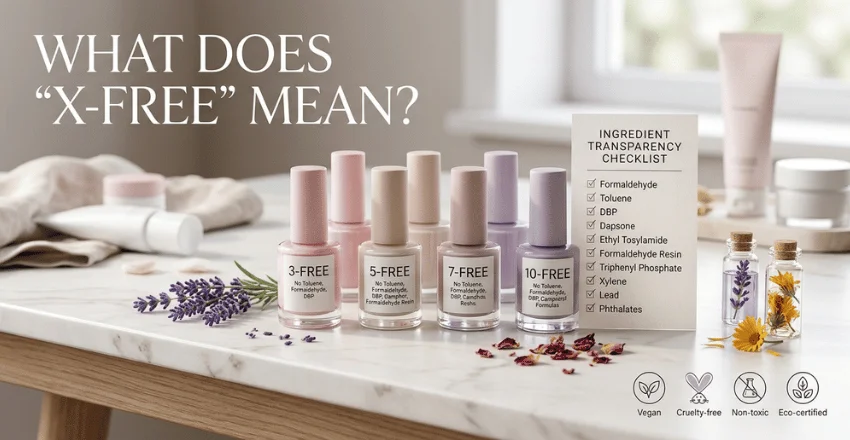
Labels such as 3-free, 5-free, 10-free, or 15-free describe ingredients a brand says it has excluded. They do not describe how the manicure dries or how long it lasts. For example, a 10-free product might still be a traditional lacquer.
Common exclusions can include formaldehyde, toluene, dibutyl phthalate, camphor, or certain resins. The exact list varies as the number increases. There is no single universal definition covering every “free-from” number across all brands.
Read the ingredient list instead of judging a bottle by its number alone. A larger number does not automatically mean a product is risk-free or suitable for every allergy. FDA guidance recommends following labels and paying attention to reactions from nail products.
Nail Finishes: Matte, Shimmer, Chrome, and Magnetic
A finish describes how the manicure looks, not how its underlying formula hardens. The same shade family can look completely different with a flat, reflective, or dimensional surface. Finish also affects application because some effects require special powders, magnets, or top coats.
Matte has little or no reflective shine and may come from colored lacquer or a matte top coat. Shimmer contains fine reflective particles that catch light without producing a full mirror effect. Both can appear in ordinary air-dry or cured formulas.
Chrome creates a highly reflective, metallic surface and is often produced with powder over a suitable cured base. Magnetic, or “cat-eye,” effects use responsive particles moved with a magnet before the coating sets. Follow the specific system instructions because not every effect uses the same curing process.
StudioStylee also covers creative nail-art styles beyond basic color. Its Vogue Nails feature can provide design inspiration once you choose your preferred formula and finish.
Nail Health Basics for Safer Manicures
Removal technique often matters as much as the product you choose. Peeling, prying, and forceful scraping can take surface layers of the natural nail with the coating. Use the remover and soaking method recommended for your exact system instead.
Keep cuticles and the surrounding skin moisturized after removal. Give damaged, peeling, or unusually thin nails time before applying another enhancement. A dermatologist should evaluate persistent pain, swelling, separation, discoloration, or rash.
HEMA, or 2-hydroxyethyl methacrylate, is an acrylate associated with allergic contact dermatitis in some people. Other acrylates and methacrylates can also cause sensitization, so “HEMA-free” does not mean allergy-proof. Avoid getting uncured gel on skin and stop using a product if a reaction develops.
Lamp users can take simple precautions without assuming occasional exposure guarantees harm. Apply broad-spectrum SPF 30 or higher to exposed hands before curing, or use opaque fingerless gloves. Follow the curing time and compatible lamp specified by the product manufacturer.
Which Type Should You Choose?
Your ideal system depends on how long you want the manicure to last. Regular, water-based, and many gel-effect formulas suit frequent color changes. Gel, dip, and acrylic fit people who value longer wear or added structure.
Removal should influence the decision as much as durability. A product lasting three weeks may not suit someone who dislikes acetone soaking or professional maintenance. Shorter-wear lacquer can be more convenient because it takes less effort to change.
Think about finish last, after choosing the underlying system. Matte, shimmer, chrome, or magnetic effects can then refine the look. This approach prevents a visual trend from pushing you toward maintenance you do not want.
Frequently Asked Questions
What are the different types of nail polish?
The main options include traditional lacquer, cured gel, gel-effect lacquer, breathable formulas, and water-based color. Dip powder and acrylic are commonly compared with them, although both function more like enhancement systems. “X-free” labels describe ingredient exclusions rather than a distinct manicure category.
Is gel better than regular lacquer?
Neither option is universally better. Gel generally lasts longer and resists chipping, while regular lacquer removes faster and doesn’t require a curing lamp. The better choice depends on your preferred wear time and maintenance routine.
How long should a manicure last?
Regular color often lasts about three to seven days, while gel commonly reaches two to three weeks. Dip and acrylic may remain wearable for several weeks with appropriate maintenance. These are rough ranges rather than promises.
Should gel be scraped off after soaking?
No aggressive scraping should be needed for a correctly softened soak-off product. Follow the manufacturer’s soaking instructions and allow enough time for the coating to loosen. If it remains firmly attached, continue the recommended removal process rather than forcing it.
Is HEMA-free gel safe for everyone?
HEMA-free labeling only confirms that the named ingredient is absent. Other acrylates may still trigger reactions in someone who has become sensitized. People with a suspected nail-product allergy should discuss suitable products with a dermatologist.
Choose for Your Routine, Not Only the Finish
A beautiful manicure works best when its upkeep matches your routine. Decide how much wear, removal time, curing, and structural support you want before choosing a color. Then select the finish that gives you the look you prefer.
For quick changes, traditional or water-based options keep maintenance simple. For longer wear, a properly applied gel or enhancement system may be a better fit. Whichever route you choose, gentle removal and careful skin contact remain important parts of nail care.