Ever caught yourself in the mirror wondering how to keep those early greys from looking accidental or patchy? Picture this: a coffee shop, a crisp navy blazer, and a hairline that reads intentional—salt-and-pepper, not neglected. If you’re transitioning into grey or already have strands popping through dark roots, grey blending dark hair can be the difference between tired and timeless.
Why Choose Grey Blending Dark Hair?
Grey blending is a savvy color technique that softens the contrast between dark base hair and emerging grey, giving you a natural, low-maintenance finish. Instead of fighting your salt-and-pepper, you work with it — often using methods like lowlights, highlights, balayage, or a color melt to create a cohesive look that complements your face shape and personal style.
How Grey Blending Dark Hair Works
At its core, this approach involves strategically adding tones that bridge dark hair and grey. A professional barber or colorist will:
- Assess your base color, grey pattern, and skin tone.
- Choose a technique—subtle highlights, root smudging, or balayage—to diffuse contrast.
- Use demi-permanent or semi-permanent dyes and glosses to avoid harsh regrowth lines.
The result is a seamless transition that looks like it grew that way—perfect for men who want sophistication without weekly touch-ups.
Popular Techniques Explained
- Balayage: Hand-painted highlights that fade naturally; great for thicker hair and longer styles.
- Root Smudge/Shadow Root: Softens the root line so grey and dark meet more gracefully—ideal for short cuts.
- Lowlights: Adds depth to thin areas of grey, useful for creating contrast without bleaching.
- Color Melt: Blends multiple tones from root to tip for a polished, gradient look.
Best Haircuts to Pair with Grey Blending Dark Hair
Picking the right cut will amplify the blended color. Try these styles depending on your vibe:
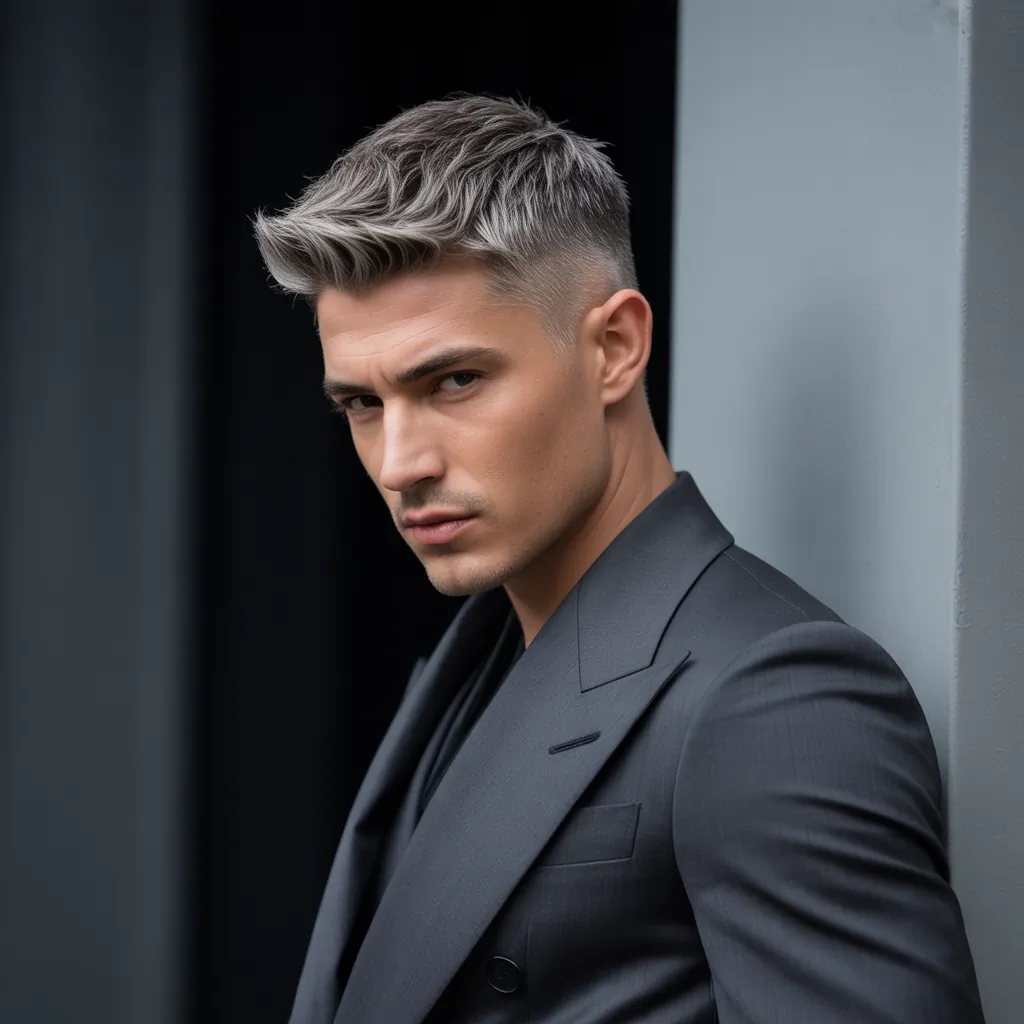
- Textured Crop — Adds movement and disguises uneven grey growth. Looks sharp with matte paste.
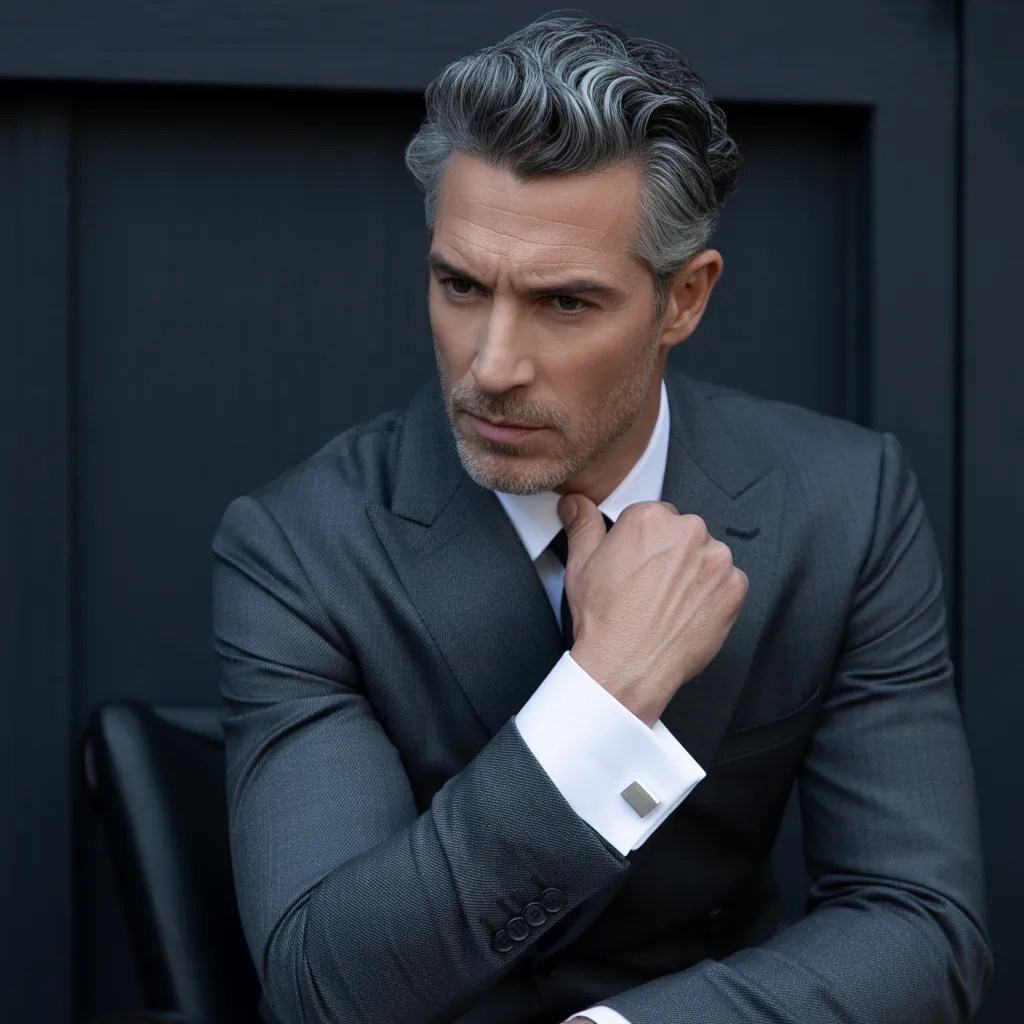
- Classic Side Part — Sophisticated; grey at the temples reads distinguished rather than tired.
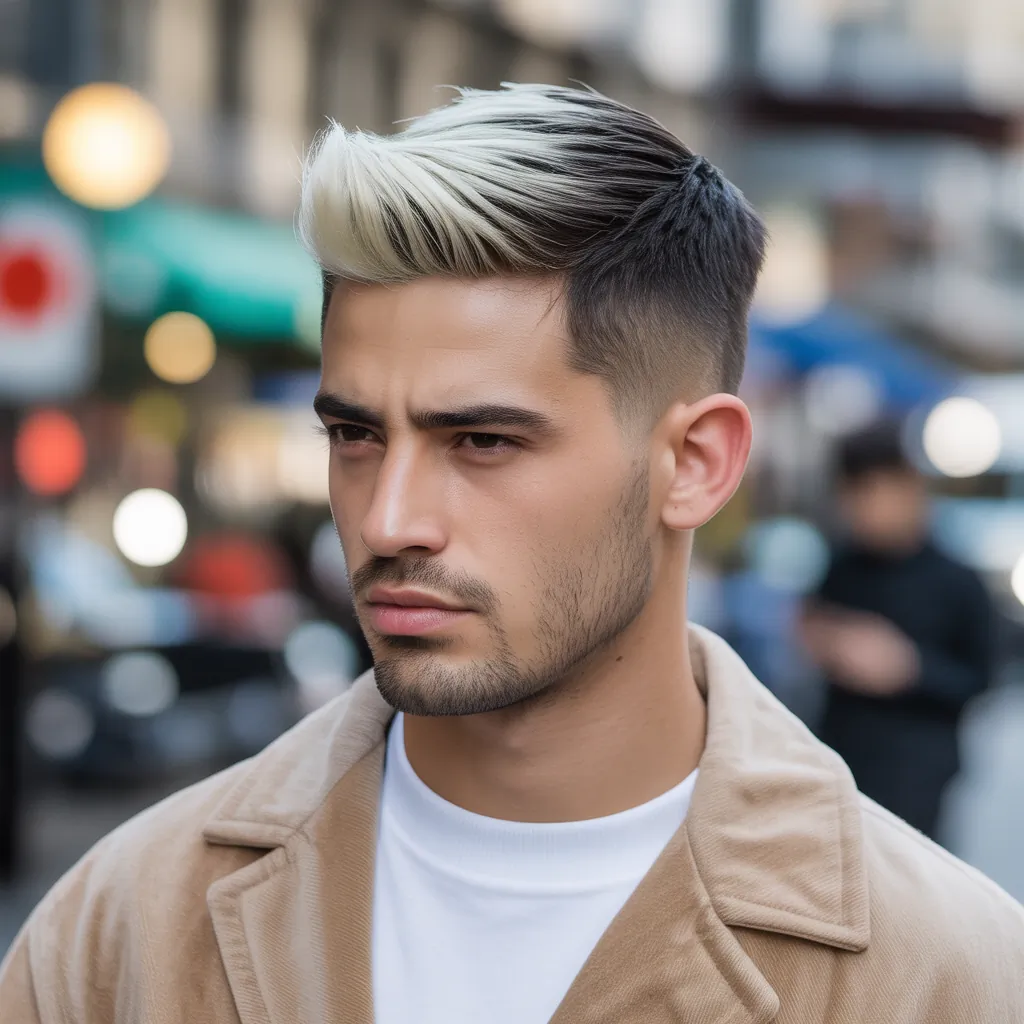
- Faded Sides with Longer Top — Keeps the focus up top where blending is most visible; modern and easy to style.
- Short Pompadour or Quiff — Works well if you want a bit of lift and contrast; use a light pomade to define.
Style Tips and Outfit Combinations That Complement Grey Blending
Grey blending dark hair pairs particularly well with a refined, neutral-forward wardrobe. Here are outfit ideas for different occasions:
Casual Weekend
- Layer a charcoal henley under a soft olive utility jacket.
- Dark denim or tapered chinos keep the palette grounded and let hair tones pop.
Office Smart
- Navy blazer, white oxford, and medium-gray trousers — the mix of blues and greys highlights salt-and-pepper evenly.
- Leather loafers or derby shoes in dark brown finish the look.
Date Night or Events
- Monochrome charcoal suit with a black tee for modern elegance — grey hair brings instant maturity.
- Add a textured scarf or pocket square to avoid looking too flat.
Products, Maintenance & Real-World Advice
Maintenance is the practical side of grey blending dark hair. The goal is to balance upkeep with convenience.
Essential Products
- Color-depositing conditioners or glazes — refresh tones and reduce brassiness without bleaching.
- Purple or blue shampoo (sparingly) — neutralizes warm undertones in grey and silver highlights.
- Light styling paste or matte cream — holds texture without clumping silver strands.
How Often to Touch Up
Expect salon touch-ups every 8–12 weeks for highlights or smudging. If you prefer a more hands-off approach, ask your colorist for softer, blended techniques that can stretch to 12–16 weeks.
DIY vs Professional
While there are at-home kits for grey coverage, blending dark hair with grey is a finesse job. A trained colorist will read your greying pattern and choose tones that suit your complexion—saving you from a patched or flat finish. For small maintenance, color-depositing products at home are fine between salon visits.
Styling the Finished Look
When styling, keep the texture natural. Over-styling or heavy gloss can make grey look artificial. Aim for products that enhance movement and separation. If you have facial hair, groom it to match the hair blend—salt-and-pepper stubble looks intentional and cohesive.
Where to Start: A Simple Game Plan
- Book a consult with a barber/colorist and bring photos of looks you like.
- Decide on a technique (balayage, smudge, or lowlights) and maintenance level you can commit to.
- Invest in a color-refresher product and a gentle shampoo to protect tones.
Grey Blending Dark Hair — Frequently Asked Questions
1. Will grey blending dark hair make me look older?
Not necessarily. When done correctly, blending can look very modern and distinguished. The key is tone selection and a flattering haircut. Salt-and-pepper can add maturity and style rather than age.
2. How long does the color last before needing touch-ups?
Depending on the technique, expect salon touch-ups every 8–12 weeks for highlights and root smudges. Softer blends and lowlights can stretch to 12–16 weeks.
3. Can I do grey blending at home?
Minor maintenance like color-depositing conditioners or glosses is safe at home. For the initial blending—balayage, color melt, or root smudge—a professional appointment is recommended to avoid uneven tones and damage.
Conclusion — Make Your Grey Work for You
Grey blending dark hair is your ticket to a refined, intentional look that suits both casual weekends and sharp boardroom moments. Whether you want a low-maintenance smudge or a full balayage, the right technique, cut, and wardrobe will turn those silver strands into a style asset. Ready to take the next step? Book a consultation with your barber or explore more tips on Men’s Hairstyles and grooming essentials on our Grooming Basics or Haircare for Men pages. Embrace the transition — it’s easier (and better looking) than you think.