
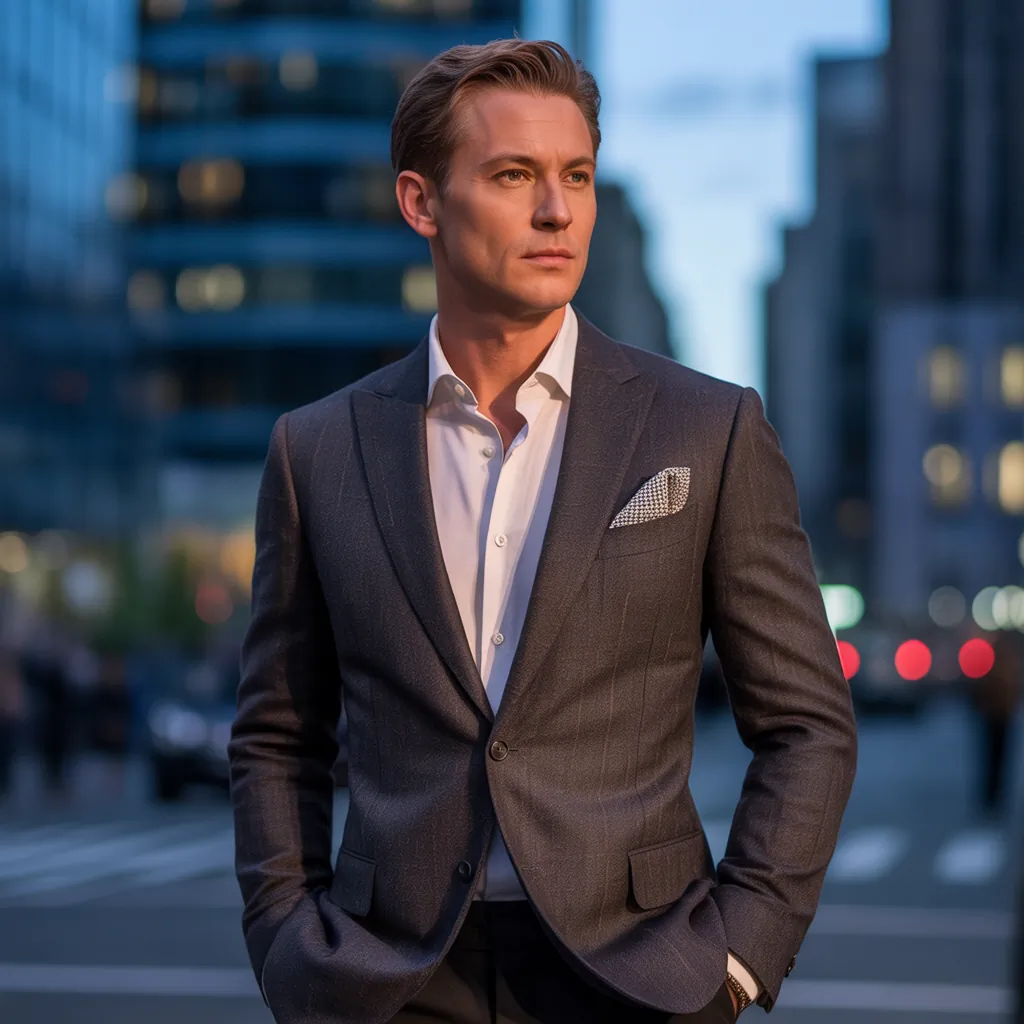
The easiest classy blazer outfits for men start with a navy or charcoal blazer that fits well at the shoulders, then change the pieces underneath: chinos and a white shirt for the office, dark jeans and a knit for weekends, a turtleneck in winter, and dress trousers with oxfords for weddings. Fit matters more than price, and matching the blazer’s formality to your shoes and trousers keeps every combination looking intentional.
Below are eight looks you can copy, a quick reference table, a fit checklist, fabric and color advice, and the mistakes that make a blazer look borrowed.
Why a Blazer Is the Most Versatile Piece in a Man’s Wardrobe
A blazer bridges smart and casual dressing. It adds structure to a tee and jeans, sharpens business casual, and can carry you through dinners, weddings and travel days with only small changes. Strictly speaking, a blazer is a solid-colored jacket that isn’t part of a suit, and a sport coat is a more casual, often patterned or textured jacket. In everyday use the terms overlap, and both work in the outfits below.
Classy Blazer Outfits Men: 8 Looks to Copy
| Occasion | Blazer | Underneath | Trousers | Shoes |
|---|---|---|---|---|
| Office | Navy wool | White button-down | Light gray or beige chinos | Brown loafers |
| Smart-casual weekend | Charcoal or mid-gray | Fine-gauge knit or tee | Dark indigo jeans | Minimal sneakers or Chelsea boots |
| Date night | Black or burgundy velvet | Black shirt | Black jeans | Chelsea boots |
| Cold weather | Tweed or textured wool | Slim turtleneck | Wool trousers | Leather boots |
| Summer | Linen or cotton, light color | Breathable shirt | Linen trousers or tailored shorts | Suede loafers |
| Travel | Unstructured stretch | Quality tee | Tapered joggers or dark jeans | Clean sneakers |
| Semi-formal | Double-breasted or sharp single-breasted | Dress shirt | Dress trousers | Oxfords |
| Creative office | Olive or brown | Oxford shirt or polo | Cream chinos | Suede desert boots |
1. The Classic Office: Navy Blazer and Chinos
Pair a navy blazer with light gray or beige chinos, a crisp white button-down and brown leather loafers. Add a slim belt that matches your shoes and a simple watch. This polished business casual outfit works for client meetings, presentations and networking events.
2. Smart-Casual Weekend: Gray Blazer and Dark Denim
A charcoal or mid-gray blazer with dark indigo jeans and a fine-gauge knit or plain tee is a dependable modern look. Choose minimal sneakers for daytime or Chelsea boots for the evening. It’s ideal for casual Fridays or relaxed dates.
3. Date Night: Velvet or Black Blazer and Black Jeans
For evenings out, a black or deep burgundy velvet blazer with a black shirt and fitted black jeans looks elevated without being formal. Keep accessories simple: a leather-strap watch and, if you like, a muted pocket square.
4. Cold-Weather Layering: Tweed Blazer and Turtleneck
A tweed or textured wool blazer over a slim merino turtleneck, with wool trousers and leather boots, is warm and refined for cooler months and holiday gatherings. Keep the turtleneck thin so the blazer still buttons cleanly.
5. Summer Smart: Linen Blazer and Light Shirt
In warm weather, choose a light-colored linen or cotton blazer, ideally half-lined or unlined. Pair it with a breathable shirt, linen trousers or tailored shorts, and suede loafers. Keep proportions slim so the outfit doesn’t look boxy, and accept that linen will wrinkle a little.
6. Travel-Friendly: Unstructured Blazer and Tee
An unstructured blazer in a stretch fabric over a good tee, with tapered joggers or dark jeans, is comfortable for long journeys and still looks put-together when you arrive. Look for jackets that resist creasing and have inside pockets for a passport and phone.
7. Semi-Formal: Double-Breasted or Sharply Tailored Blazer
For weddings or cocktail parties, a double-breasted blazer or a well-tailored single-breasted jacket in navy or charcoal, worn with dress trousers and oxfords, sits nicely between a tuxedo and a business suit. Keep a double-breasted jacket buttoned when standing.
8. Creative Office: Earth-Tone Blazer and Cream Chinos
An olive, brown or camel blazer with an oxford shirt or knit polo, cream chinos and suede desert boots looks relaxed but considered. It suits offices where a full navy-and-gray uniform feels too stiff.
Fit, Fabric and Color: The Three Pillars
Fit Checklist
Fit matters more than the label. Check these points in the fitting room:
- Shoulders: the seam should end at your natural shoulder, with no divots or overhang.
- Sleeves: show about a quarter to half an inch of shirt cuff.
- Chest: the blazer should skim your torso when buttoned, with no X-shaped pulling around the button.
- Length: the hem should roughly cover the seat of your trousers for a classic look; slightly shorter reads more modern.
- Collar: it should sit flat against your shirt collar without a gap.
Shoulders are the hardest and most expensive area to alter, so prioritize them. Sleeves, waist suppression and length adjustments are usually straightforward for a tailor. We cover the full picture in our guide to classy outfits for men, and our Tailoring Tips explain what alterations are worth paying for.
Fabric by Season
Match fabric to the season and setting: linen and cotton for summer, wool and tweed for fall and winter, and velvet for evening events. A mid-weight wool blazer is the best all-season choice if you only own one.
Color Order to Build Your Collection
Start with navy, then charcoal, then a textured or earth-tone option such as olive, brown or a subtle check. Navy works with nearly every trouser color and is the safest first purchase.
Practical Style Tips and Accessories
- Keep the silhouette clean: slim to medium lapels look modern; wide lapels suit vintage or statement pieces.
- Match formality: dress blazers with dress shoes, casual blazers with sneakers, loafers or boots.
- Use pocket squares sparingly; a subtle color or pattern adds personality without overpowering.
- Match belt and shoe leather tones for a cohesive outfit.
- Avoid bulky layers under structured blazers; fine knits and dress shirts keep the shape.
- Leave the bottom button of a two- or three-button single-breasted blazer undone.
Common Blazer Mistakes to Avoid
- Wearing a suit jacket as a separate blazer; the smooth suit fabric looks like a missing half.
- Choosing a size up for comfort, which makes the shoulders collapse.
- Pairing a formal worsted blazer with athletic sneakers.
- Leaving tacking stitches on vents and pockets after purchase; snip the vent stitches before wearing.
- Wearing heavily distressed jeans with a structured blazer.
When and Where to Wear Different Blazer Styles
For work, pick solid colors in wool blends with conservative details. For casual weekends, textured blazers, patterned shirts and relaxed trousers work well. For formal events, choose darker blazers with clean lines. If you’re unsure, lean slightly more formal; it’s easier to dress a blazer down by removing a tie than to dress up casual pieces.
Care and Maintenance
Rotate blazers so each one rests between wears, avoid overstuffing pockets, and hang jackets on wide wooden hangers to support the shoulders. Brush wool after wearing, spot clean small marks, and reserve dry cleaning for stains or a few times a season, since frequent cleaning wears fabric down. Steam to remove wrinkles between wears.
Frequently Asked Questions
How should a blazer fit across the shoulders?
The shoulder seam should sit right at the edge of your natural shoulder. If it hangs over, it’s too big; if it cuts in or pulls, it’s too small. Get this right first, because shoulders are difficult to alter.
What should I wear with a blazer for a casual look?
Pair an unstructured or textured blazer with a clean tee or knit, dark jeans or chinos, and minimal sneakers or loafers. Skip formal dress shirts and shiny shoes to keep it relaxed.
Can you wear a blazer with jeans?
Yes. A blazer with well-fitting dark denim is a classic smart-casual combination. Choose a blazer with some texture, such as wool or tweed, and avoid ripped or heavily distressed jeans.
What color blazer should a man buy first?
Navy is the most versatile first blazer because it works with gray, beige, white and denim trousers and suits both office and evening wear. Charcoal is a strong second choice.
What’s the difference between a blazer and a sport coat?
A blazer is traditionally a solid-colored jacket, often navy, while a sport coat is more casual and usually patterned or textured. Both are worn with non-matching trousers, unlike a suit jacket.
Bottom Line: Build Your Blazer Rotation
Start with one versatile blazer in navy or charcoal and practice the office, weekend and date-night combinations above. Once that works, add a textured option and a seasonal piece in linen or tweed. Spend a little on tailoring for the best possible fit, and a single good blazer will upgrade most of what’s already in your closet.