
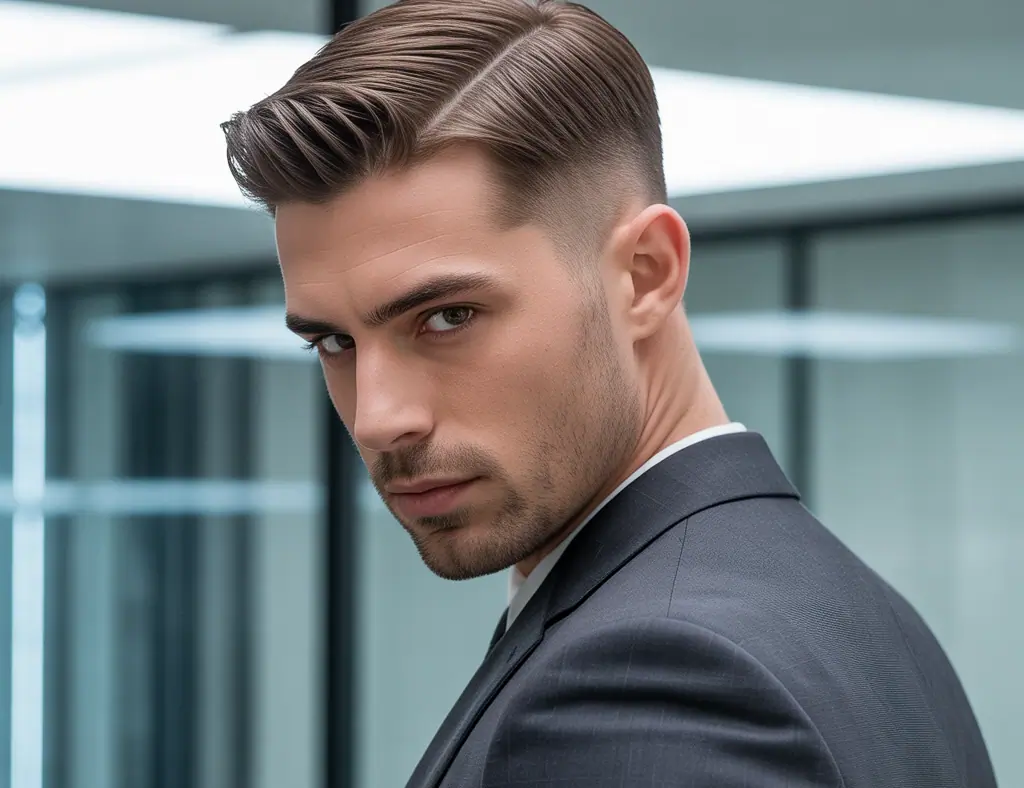
The best business haircuts for men are the classic side part, a low or mid taper, the crew cut or Ivy League, a tidy textured crop, and a restrained comb-over or pompadour. Each one keeps the sides neat, the hairline clean, and the top controlled, so it looks polished with a suit or with business casual and stays sharp between barber visits.
Below you will find what each cut looks like, how to pick one for your face shape, hair type, and workplace, the products and routine that keep it office-ready, and the exact phrases to use with your barber.
Why Your Haircut Matters at Work
Your haircut is part of how colleagues and clients read you before you say a word. A clean, well-maintained cut signals attention to detail and respect for the setting; an overgrown or overly trendy one can distract from your work. A good business haircut balances style with subtlety: it complements suits, blazers, and smart-casual outfits without competing with them.
Business Haircuts at a Glance
| Haircut | Formality | Daily styling | Trim frequency | Works best with |
|---|---|---|---|---|
| Classic side part | High | About 5 minutes | Every 4-6 weeks | Straight or slightly wavy hair |
| Low or mid taper fade | Medium to high | 2-5 minutes | Every 3-5 weeks | Most hair types |
| Crew cut / Ivy League | Medium to high | 1-2 minutes | Every 3-6 weeks | Thick or coarse hair, busy schedules |
| Textured crop | Medium | 2-3 minutes | Every 4-5 weeks | Wavy or thick hair, creative offices |
| Comb-over / restrained pompadour | High | 5-8 minutes | Every 4-6 weeks | Medium to thick hair |
5 Classic Business Haircuts for Men
1. Classic Side Part
The side part is the safest choice in almost any industry and suits most face shapes. Ask for a clean taper on the sides with enough length on top to hold a part, usually around two to three inches. Apply a light pomade or cream to damp hair, comb the part along your natural cowlick, and smooth the top across. It pairs naturally with a suit and tie.
2. Short Taper or Taper Fade
A taper shortens the hair gradually toward the neckline and ears, which looks neat without the stark contrast of a skin fade. A low or mid taper keeps the outline clean while leaving the top long enough for a comb-over or textured style. It is a good option if you want a modern edge but work somewhere fairly conservative.
3. Crew Cut or Ivy League
The crew cut keeps the top short and the sides shorter still; the Ivy League leaves the top long enough to part. Both are low-maintenance and look sharp with suits or knitwear. A small amount of matte paste pushed forward and slightly to the side is usually all the styling you need.
4. Textured Crop
A textured crop with a soft fringe is a contemporary option for creative or tech roles that still expect a polished look. Keep the sides tidy and avoid high, dramatic fades if your office leans corporate. A matte clay worked through towel-dried hair gives texture without shine.
5. Comb-Over or Restrained Pompadour
If you want some height and polish, a modest pompadour or comb-over looks very professional. Keep the sides tapered, blow-dry the top up and back on low heat, and use a medium-hold product with a low or natural shine. The key word is restrained: aim for an inch or so of lift, not a towering quiff.
How to Choose the Right Business Haircut
Three factors decide which cut will work best: your face shape, your hair, and your workplace.
Face Shape
- Oval: most styles work, so choose based on hair type and preference.
- Square: side parts and tapers emphasize your natural structure.
- Round: add some height on top, with a comb-over or modest pompadour, and keep the sides shorter.
- Heart or oblong: avoid too much height; balanced side parts and crops work better.
Hair Texture and Density
Fine hair looks fuller in shorter cuts with a volumizing product such as a light mousse or texturizing spray. Thick or curly hair is easier to control with a taper on the sides and some texturizing on top; your barber may suggest thinning or layering. Coarse hair often suits a crew cut or short crop that needs little product.
Company Dress Code and Industry
Conservative fields such as finance, law, and many client-facing roles favor low-contrast cuts like soft tapers and side parts. Creative, tech, and startup offices usually accept more texture and length. When you are unsure, choose a versatile cut you can style neatly for meetings and more relaxed on Fridays.
Styling Routine and Products
A simple, repeatable routine is what makes a cut look professional every day. Here is a five-minute version for most of the styles above:
- Wash or rinse hair and towel-dry until damp, not dripping.
- Blow-dry on low heat in the direction you want the hair to sit.
- Warm a pea-sized amount of product between your palms.
- Work it from the back of the head to the front, then shape with a comb or fingers.
- Check the sides and hairline in the mirror and smooth any stray pieces.
- Matte paste or clay: natural finish for crops, crew cuts, and tapers.
- Light pomade or cream: controlled, low-shine finish for side parts.
- Medium-hold pomade: keeps comb-overs and pompadours in place all day.
- Leave-in conditioner: a dime-sized amount helps with dry or frizzy hair.
Matte formulas tend to look more natural in person and on video calls. Start with less product than you think you need; it is easier to add than remove. For more on daily routines, see our Grooming Tips.
Matching Your Haircut to Your Work Wardrobe
| Dress code | Haircut | Outfit | Shoes |
|---|---|---|---|
| Business formal | Classic side part or comb-over | Navy or charcoal suit, white shirt, conservative tie | Oxfords or derbies |
| Business casual | Taper or textured crop | Blazer, patterned shirt, chinos | Loafers or brogues |
| Smart casual | Crew cut or modern pompadour | Merino sweater over a collared shirt, dark jeans or tailored trousers | Chelsea boots or clean leather sneakers |
In business-casual settings, slightly looser texture is fine as long as the sides and neckline stay tidy. Browse our Men’s Fashion section for more outfit ideas.
How to Talk to Your Barber
Clear communication gives you consistent results visit after visit. Try these prompts:
- “I need a professional, office-appropriate cut that takes five minutes or less to style.”
- “How much would you leave on top, and which clipper guard would you use on the sides?”
- “Please keep the taper low and well blended rather than a high-contrast fade.”
- “I prefer a matte finish. Which product would you recommend for my hair?”
Bring a photo of the cut on someone with similar hair, and once you find a cut you like, ask the barber to note the guard numbers so you can request the same thing next time.
Common Mistakes with Professional Haircuts
- Waiting too long between cuts: the neckline and ears get shaggy before the top looks long.
- Too much shine: heavy gel or high-shine pomade can look dated in most offices.
- High-contrast fades in conservative workplaces: a skin fade may draw attention in a traditional setting.
- Ignoring your hair texture: forcing a slick side part on very curly hair takes more product and effort than a well-shaped crop.
Maintenance: How Often to Get a Cut
- Tapers and fades: every 3-5 weeks.
- Side parts and pompadours: every 4-6 weeks.
- Crew cuts: every 3-6 weeks, depending on how fast your hair grows.
Booking your next appointment before you leave the shop is the simplest way to stay on schedule, especially before important presentations or interviews.
Frequently Asked Questions
What is the most professional haircut for men?
The classic side part and a conservative taper are the most widely accepted professional cuts. Both work across industries and pair well with suits and business-casual outfits.
Can I have a fade and still look corporate?
Yes, if it is a low or mid taper that is well blended. Avoid high, high-contrast skin fades if you work in a conservative environment.
Which products are best for office hairstyles?
Matte pastes, light pomades, and medium-hold creams give control without excess shine. Choose a volumizing product for fine hair and a smoothing one for thick hair.
Is long hair acceptable in a professional setting?
In many workplaces, yes, as long as it is clean, trimmed, and neatly styled or tied back. Conservative industries may still favor shorter cuts, so consider your company culture.
How do I keep my haircut looking sharp between appointments?
Stick to a short daily routine, use a small amount of the right product, and book trims every three to six weeks. Some barbers also offer quick neckline cleanups between full cuts.
Bottom Line
The right business haircut is flattering, easy to maintain, and suited to your wardrobe and workplace. Pick one cut from the comparison table, use the barber prompts above at your next appointment, and keep a five-minute routine with a matte product. Consistency, with regular trims and the same reliable hairstyle routine, matters more than any single trend.