Ever stood in front of your closet on a Monday morning wondering whether your blazer will read “professional” or “trying too hard”? If you work in an office with a flexible dress code, mastering business casual men’s style can save time, reduce stress, and elevate your presence without sacrificing comfort. This guide breaks down practical outfits, style rules, and real-world tips so you’ll always know what to wear.
What “business casual” actually means for men
Business casual for men sits between traditional suits and weekend wear: polished but relaxed. Think structured pieces (blazers, chinos, button-downs) mixed with softer, less formal items (knitwear, loafers, dark denim). The key is balance—combine smart tailoring with comfortable fabrics and muted colors so you look professional without looking overdressed.
Core wardrobe pieces every man should own
Start building a capsule that makes everyday dressing simple and reliable.
- Neutral blazer (navy or charcoal) — unstructured or half-lined for comfort.
- Crisp button-down shirts — white, light blue, and subtle patterns.
- Tailored chinos — khaki, olive, and slate grey.
- Dark, clean jeans — minimal distressing and slim/straight cut.
- Fine-gauge merino or cotton sweaters — crew and V-neck.
- Leather shoes — brown loafers, derby shoes, and minimal sneakers for creative offices.
- A leather belt and a watch — small accessories that complete the outfit.
Business casual men: Outfit combinations that work
Below are easy-to-assemble looks you can rotate through the week. Each combination is adaptable for seasons and different office vibes.
Classic office day
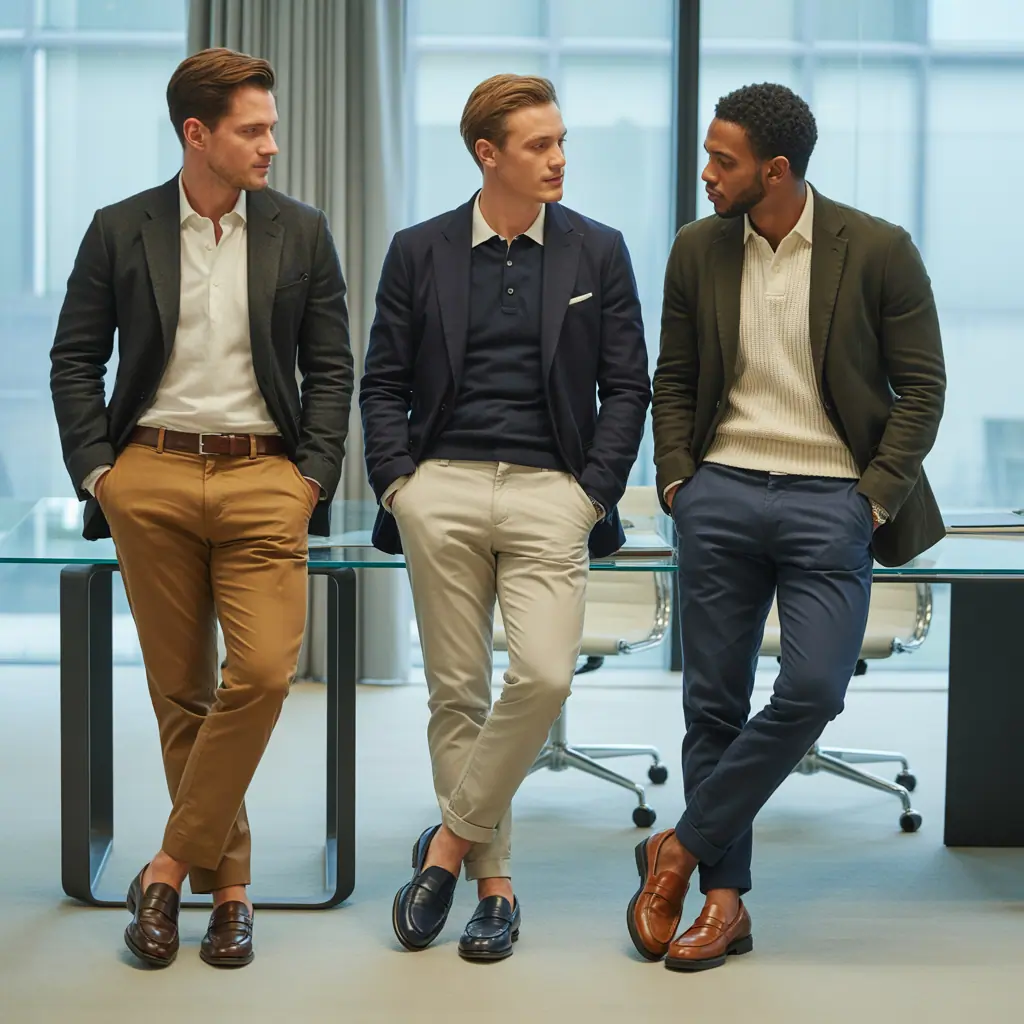
Navy unstructured blazer + white button-down + charcoal chinos + brown leather loafers. Add a thin navy knit tie if you want extra formality. This look works for client meetings and presentations—clean, confident, and photo-ready.
Smart-casual creative office
Grey merino sweater over a light blue shirt + dark raw denim (no rips) + minimal white leather sneakers. Roll up the shirt cuffs slightly for a relaxed, modern feel. Ideal for late-start meetings, agency work, or after-work drinks.
Cold-weather layering
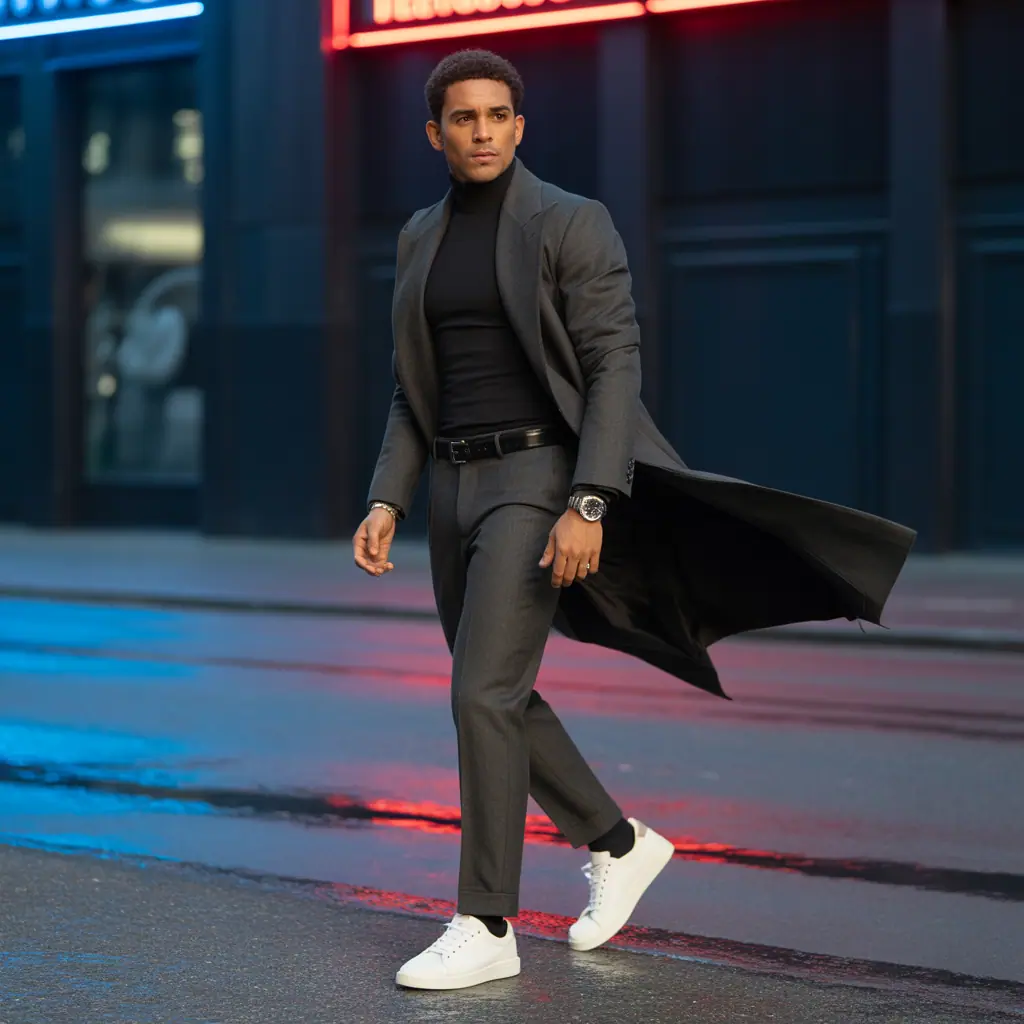
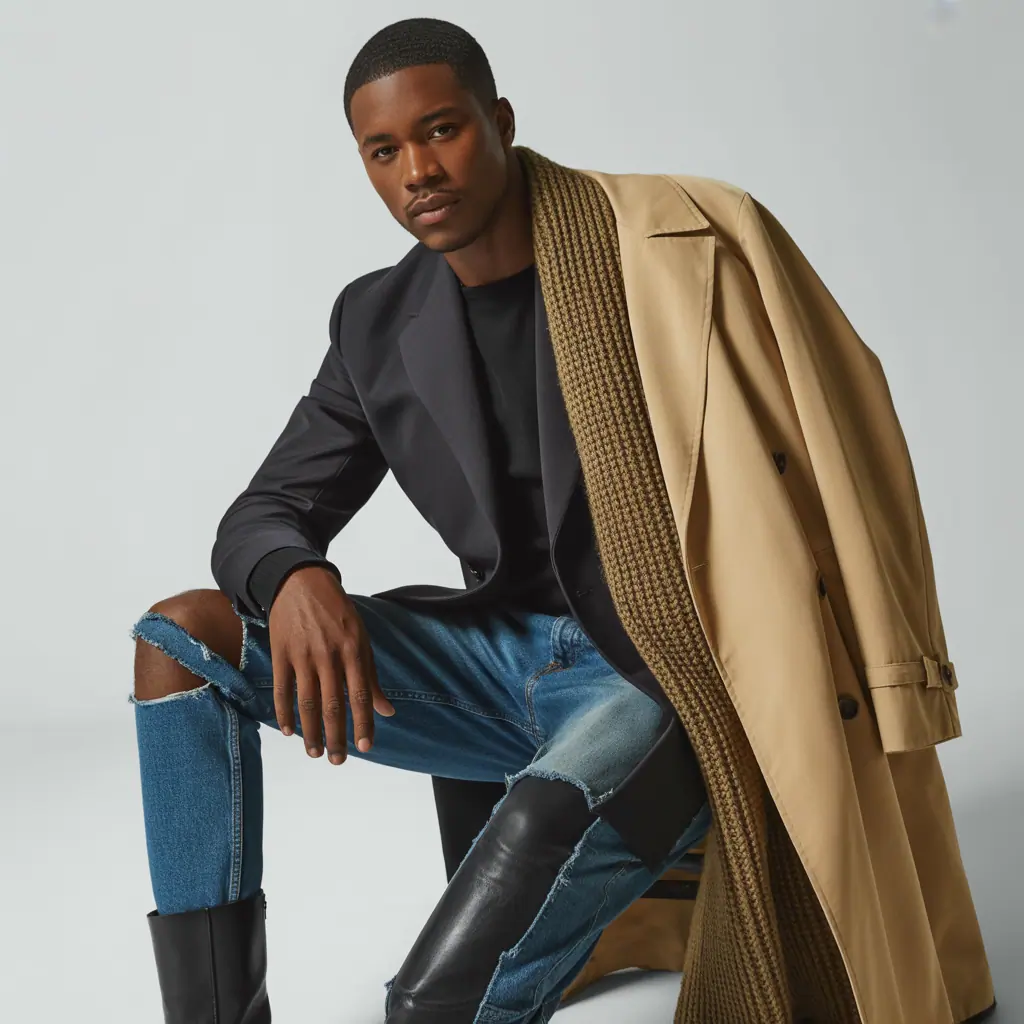
Wool overcoat or field jacket + tweed blazer + cotton button-down + tailored chinos + leather boots. Use a patterned scarf and textured fabrics to add depth while staying office-appropriate.
Fabric, fit, and color: the three styling rules
Understanding fabric, fit, and color will make buying decisions easier and your outfits more consistent.
Fabric
Choose breathable, durable materials—cotton, wool, and performance blends. Avoid shiny synthetic fabrics that read cheap on camera or under office lighting.
Fit
Fit matters more than brand. Tailored (not tight) shoulders, a tapered torso, and the correct trouser break make even affordable pieces look sharp. If in doubt, invest in simple alterations.
Color
Keep palettes neutral and versatile: navy, grey, olive, tan, and white. Add one accent color per outfit (burgundy tie, patterned pocket square) to keep looks interesting without being loud.
Shoes and accessories — finishing touches that matter
Shoes can make or break business casual outfits. Aim for clean, polished footwear and minimal accessories.
- Derby shoes and loafers are safe bets; brogues can work if subtle.
- Minimal leather sneakers are acceptable in many modern offices—choose low-profile designs in white or navy.
- Watches and belts should match (metal with metal, leather with leather) for a cohesive look.
- Keep bags professional: leather briefcase, slim tote, or clean backpack in neutral tones.
Real-world advice: dressing for different office cultures
One size doesn’t fit all. Gauge your workplace culture and adapt these guidelines.
- Conservative corporate environments: stick closer to dress shirt + blazer combinations, choose darker tones, and avoid sneakers.
- Startups and creative industries: experiment with textured knits, patterned shirts, and quality sneakers.
- Hybrid workplaces: maintain one polished option for in-office days and smart-casual flexibility for remote or casual days.
When in doubt, mirror the best-dressed colleagues and slightly elevate your outfit rather than going more casual.
How to care for business casual clothes
Proper care keeps your wardrobe lasting longer and looking professional.
- Rotate blazers and shirts to reduce wear; hang suits and blazers on wooden hangers.
- Remove lint and use a portable steamer for wrinkle-free shirts and jackets.
- Polish leather shoes regularly and use shoe trees to maintain shape.
- Follow garment care labels; dry cleaning sparingly extends the life of wool and structured pieces.
Shop smart: building a capsule for less
You don’t need a huge budget to look sharp. Start with versatile staples and add one statement piece per season. Invest in fit and fabrics first, brand names later. For more on foundational items, see our guide on men’s wardrobe basics and a deeper dive into footwear at our shoe guide.
Frequently Asked Questions
Can jeans be part of business casual for men?
Yes—if they’re dark, well-fitted, and free of distressing. Pair with a blazer and leather shoes to keep the look polished. Avoid overly casual washes and ripped styles.
Are sneakers acceptable with business casual?
In many modern offices, minimal leather or suede sneakers are acceptable. Choose low-profile, clean designs in neutral colors and pair them with tailored pieces to maintain a professional balance.
How do I dress business casual in hot weather?
Opt for lightweight fabrics like linen blends and cotton poplin. Swap heavy blazers for unlined or breathable sport coats, wear lighter colors to reflect heat, and choose loafers or suede shoes without socks (or with no-show liners) where appropriate. For seasonal layering tips, check our seasonal business casual suggestions.
Conclusion — Make business casual men’s style work for you
Getting business casual right means thinking intentionally about fit, fabrics, and the message you want to send. With a handful of dependable staples—an unstructured blazer, tailored chinos, a few shirts, and smart footwear—you’ll have a flexible wardrobe that carries you from meetings to after-hours with ease. Start small, prioritize fit, and build combinations that reflect your taste. Ready to refine your look? Update one piece this week and see the difference.
Want personalized outfit ideas or a capsule checklist? Subscribe to my newsletter or browse related posts: Wardrobe Basics, Shoe Guide.