Have you ever put on a sharp blazer or your favorite jeans and felt something was missing? Maybe the outfit looks unfinished, or the trousers sit awkwardly. That tiny finishing touch—belts—can transform an average look into a considered one. As a men’s fashion blogger, I’ve watched good outfits fall apart for lack of the right belt (and great outfits shine once the belt is right). Here’s a practical, style-forward guide to choosing, wearing and caring for belts so you never leave the house underdressed again.
Why belts matter: more than just function
A belt does two things: it keeps your pants where they should be and it ties your outfit together. Beyond utility, belts signal attention to detail. A well-chosen leather belt elevates a work outfit; a braided or canvas belt adds personality to casual looks. Think of belts as men’s accessories that bridge shoes, watches, and overall silhouette.
Types of belts every man should own
Dress belts (formal leather belts)
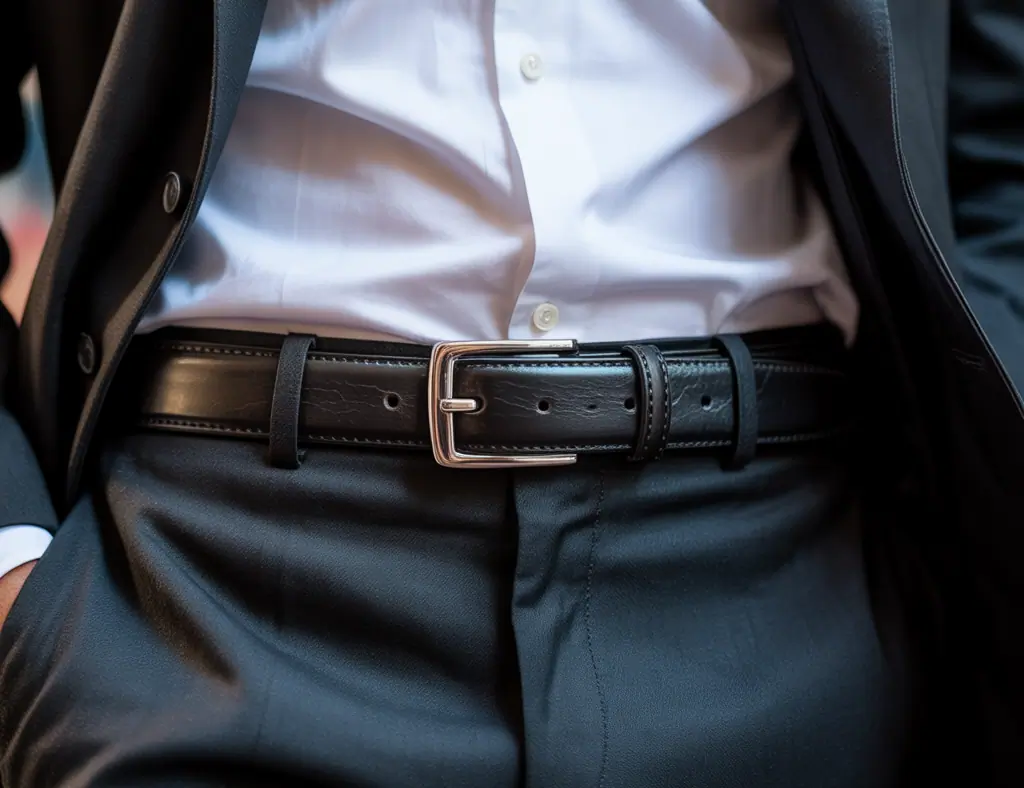
Thin, usually 1–1.25 inches (2.5–3 cm) wide, and made from smooth leather with a simple buckle. Wear with suits and dress trousers. Colors: black and dark brown are essentials.
Casual leather belts
Wider (1.25–1.5 inches / 3–3.8 cm), often with a chunkier buckle and matte finish. Perfect for chinos, khakis and business-casual looks. Match the leather tone to your shoes for cohesion.
Braided, canvas and woven belts
Flexible, easy to adjust, and ideal for smart-casual outfits. A navy braided belt can be a subtle way to introduce texture; canvas belts work well with shorts and summer looks.
Reversible belts and novelty styles
Reversible belts offer two colors in one—useful for travel—while statement buckles or contrast stitching let you personalize outfits. Keep one classic reversible belt (brown/black) in your rotation for convenience.
How to choose the right belt: fit, width and buckle
- Fit: When buckled on your usual hole, the belt tail should extend about 2–3 inches (5–7 cm) past the buckle and tuck into the first belt loop. If you’re buying a belt, choose one size larger than your trouser waist size (e.g., 32″ pants → 34″ belt).
- Width: Match width to the occasion: slim 1–1.25″ for suits; 1.25–1.5″ for everyday; 1.5–2″ for jeans and workwear.
- Buckle: Simple, polished buckles for dress belts; brushed or matte finishes for casual. Coordinate metal tones (silver, gold, gunmetal) with your watch and other hardware.
- Color: Match to your shoes when possible. Black belts with black shoes; brown belts with brown shoes. For sneakers or casual looks, navy, olive or tan can work nicely.
Outfit combinations and real-world style tips
Here are tested combinations that work in everyday life, from office to weekend.
Office — tailored and conservative
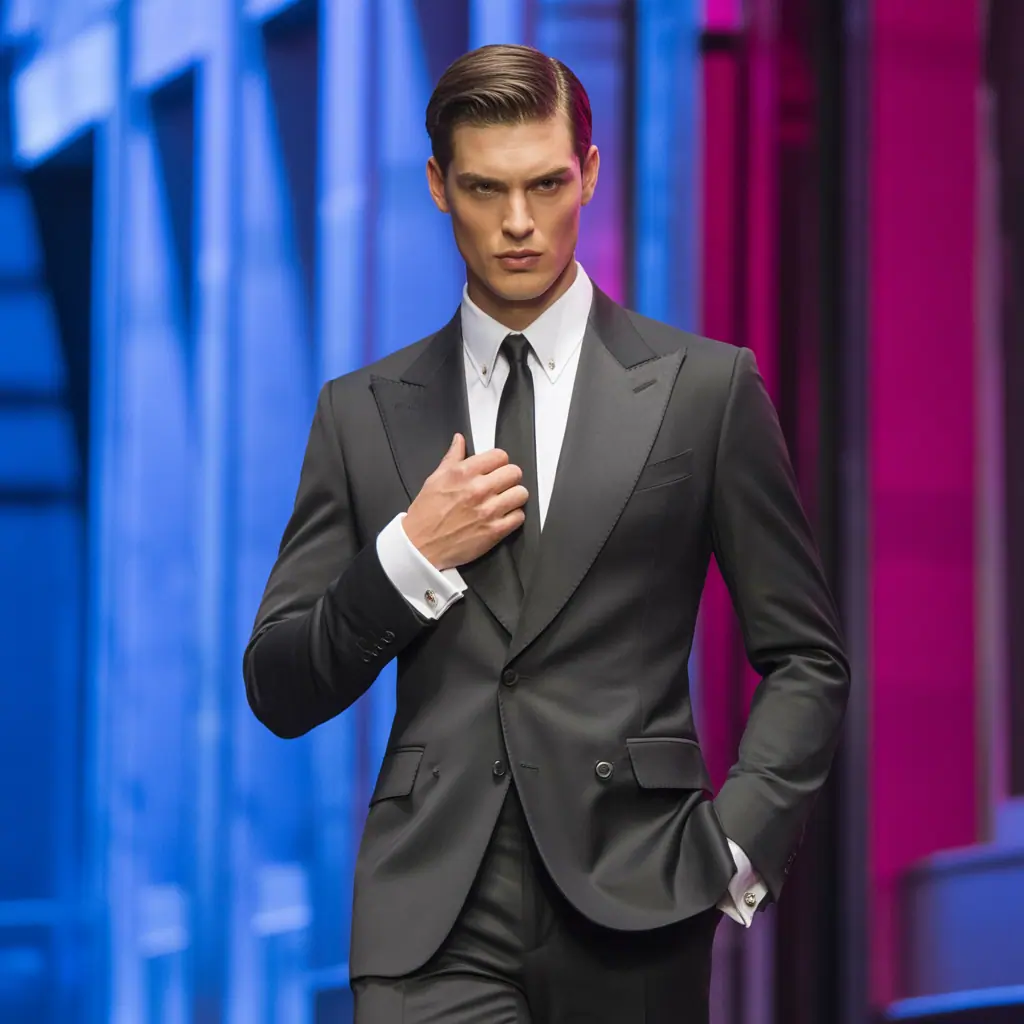
Wear a slim black leather belt with a navy suit, white shirt, and black oxfords. Keep the buckle understated and the belt width narrow. Tip: polish both shoes and belt for a cohesive, professional finish.
Business casual — polished but relaxed
Pair a brown casual leather belt with grey wool trousers, a tucked-in oxford shirt and loafers. Add a coordinating leather strap watch to tie metal/tones together.
Weekend — relaxed and confident
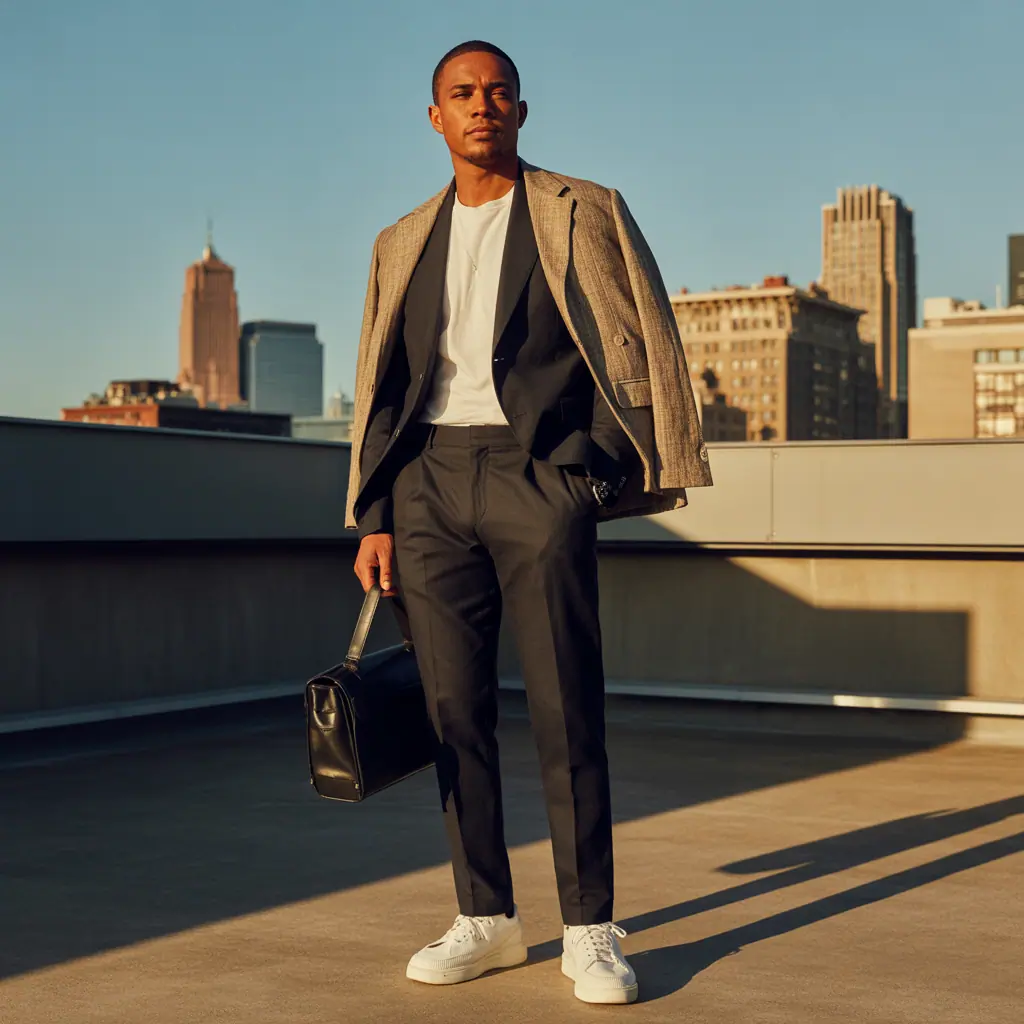
Denim and chinos call for a wider belt. Try a tan braided belt with rolled chinos, white sneakers and a polo. For colder days, swap for a canvas belt with a field jacket.
Smart-casual — texture and contrast
Match suede belts with suede shoes or boots—navy suede belt with navy chukka boots looks intentional. Avoid mixing glossy leather with suede pieces unless you’re aiming for contrast on purpose.
Belt care: keep your investment looking sharp
- Clean leather with a soft cloth; condition occasionally with a dedicated leather conditioner to prevent drying and cracking.
- Store belts flat or hung—avoid tight rolls that crease the leather.
- Rotate belts. Wearing the same belt every day speeds wear in one spot; rotating extends life and keeps outfits fresh.
- For suede, use a suede brush and avoid water. For canvas, spot-clean with mild soap and air-dry.
Belts for travel and minimal wardrobes
Travel light with one reversible leather belt (black/brown) and one casual option (braided or canvas). These two cover formal dinners, meetings and casual days off. For capsule wardrobes, stick to neutral tones and three complementary textures.
Frequently Asked Questions
1. What width belt should I wear with dress pants?
For dress pants and suits, choose a narrow belt—around 1 to 1.25 inches (2.5–3 cm). Slim belts maintain a formal silhouette and pair best with dress shoes.
2. Can I wear a belt that doesn’t match my shoes?
Yes—casual looks allow more flexibility. For formal outfits, matching leather color and finish to your shoes is recommended. For smart-casual or creative looks, complementary tones and textures can add interest.
3. How long should a belt last and how do I know when to replace it?
With proper care, a quality leather belt lasts several years. Replace a belt when the leather cracks, the stitching frays, or the holes stretch excessively. If the buckle hardware becomes loose or damaged, repair or replace it promptly.
Conclusion — make belts work for you
Belts are a small detail with big impact. Whether you choose a sleek dress belt, a relaxed braided option, or a versatile reversible model, the right belt can pull an outfit together and reflect your personal style. Start by building a core rotation—classic black dress belt, brown casual leather, and a woven or canvas option—and you’ll find getting dressed becomes simpler and smarter.
Ready to upgrade your belt game? Check out our roundup of the best belts for men, learn how to care for leather with our leather care tips, and explore more outfit ideas in our style guide. Pick one classic piece today and notice how much more polished you look tomorrow.