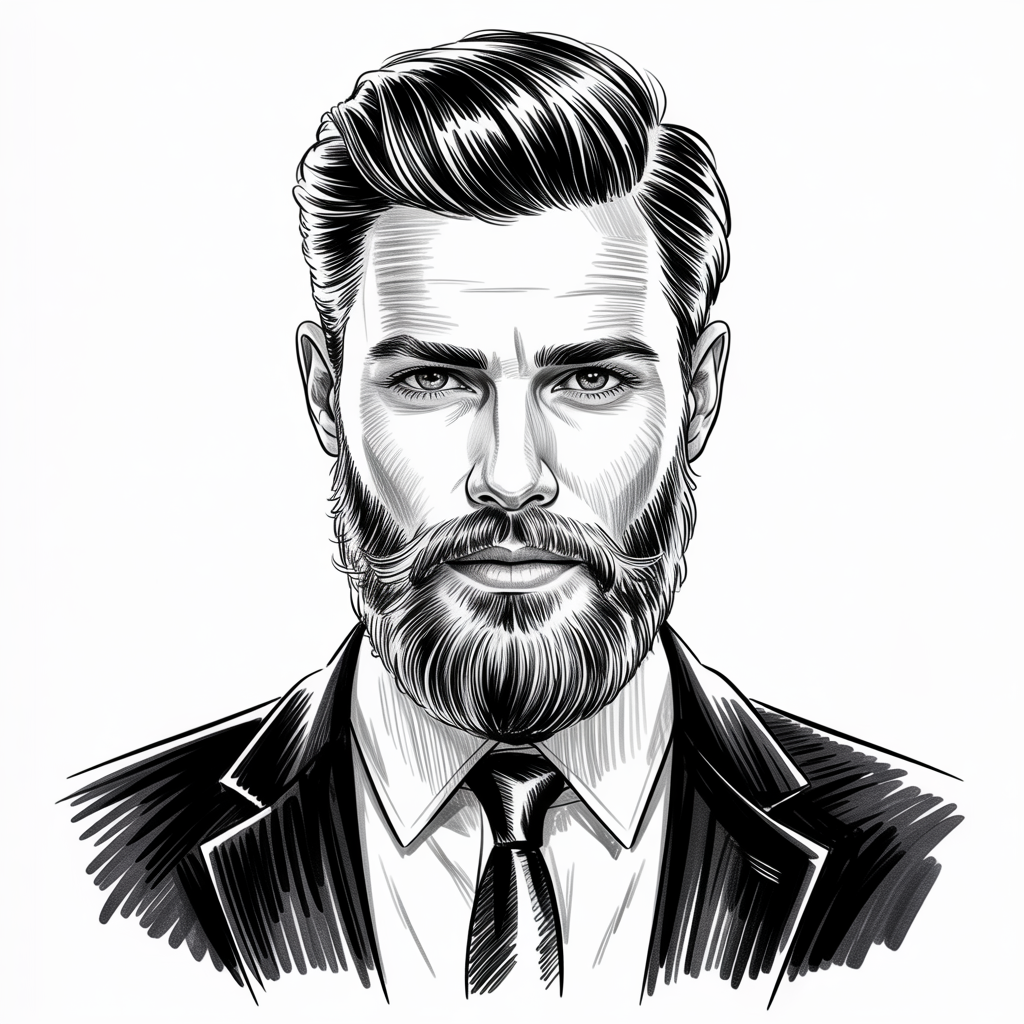
Ever stood in front of the mirror wondering whether that full beard, short stubble, or designer goatee will suit your jawline — and wished you could try it on before committing? Whether you’re prepping for a barber visit, designing a logo, or just exploring facial-hair ideas, a quick beard drawing is one of the smartest ways to visualize and refine your style before the scissors hit.
Why a beard drawing can change the way you style your facial hair
A beard sketch isn’t just for artists. It’s a practical tool for men who take grooming seriously. By drawing possible beard shapes and textures, you can:
- See how different beard lengths and shapes balance your face shape.
- Communicate a precise look to your barber using a visual reference.
- Plan maintenance and products you’ll need for the chosen style.
Tools you’ll need for a great beard drawing
You don’t need to be a professional illustrator. Start simple with:
- Pencil (HB and 2B) for basic outlines and shading.
- Fine liner or pen for hair strokes.
- Eraser and blending stump for texture and soft shading.
- Reference photos of beard styles — and a mirror if you’re sketching your face.
Step-by-step beard drawing guide
Follow these practical steps to sketch realistic facial hair, whether you want short stubble or a full beard.
1. Outline the face shape
Start with a light oval or square to represent the head. Mark the centerline and jawline. Knowing your face shape (oval, square, round, oblong) helps determine the most flattering beard silhouette.
2. Block in the beard shape
Draw the general shape of the beard — the silhouette that will frame the face. Keep it simple: a trapezoid for a full beard, a narrow strip for a goatee, or soft shading for stubble.
3. Add hair direction and texture
Hair follows natural growth patterns: diagonal along the cheeks, downward on the chin, and outward near the jaw. Use short, confident strokes for stubble and longer, layered strokes for longer beards. Vary stroke length and pressure for realism.
4. Shade and refine
Use a blending stump for volume and an eraser to create highlights where light hits the hair. Emphasize the density at the chin and mustache area. For a realistic look, avoid uniform shading — beards are denser in some spots and patchy in others.
5. Final details and presentation
Finish with a few darker lines for definition around the mouth and neckline. If you’re taking this sketch to your barber, annotate length in millimeters or reference a known style (e.g., “short boxed beard, 6 mm fade on cheeks”).
Common beard styles and how to draw them
Knowing the visual characteristics of each style makes your beard drawing more accurate:
- Stubble: Short, uniform strokes, light shading. Great for rugged, low-maintenance looks.
- Short boxed beard: Defined cheek lines and a trimmed neckline. Use crisp outlines with medium-length strokes.
- Full beard: Layered hair strokes, darker under-chin shading, softer cheek transitions.
- Goatee and Van Dyke: Focused density on the chin and mustache; keep the cheeks clean.
Style tips and outfit combinations that flatter your beard
Your facial hair is part of your personal brand — it pairs with clothing, grooming, and attitude. Below are outfit ideas tailored to beard types.
Casual & rugged (stubble or full beard)
Pair a full beard or heavy stubble with textured fabrics: denim jackets, flannel shirts, leather boots. Earth tones and rugged accessories like a beanie or canvas backpack complete the outdoorsy vibe.
Smart casual (short boxed beard)
A trimmed boxed beard complements structured layers. Think a crisp oxford shirt, a lightweight blazer, dark denim, and suede loafers. Keep grooming neat — clean cheek lines and a shaped neckline are essential.
Formal & refined (goatee or trimmed mustache)
Slim facial hair pairs well with tailored suits and minimalist accessories. A precise goatee or mustache reads polished when you keep edges sharp and maintain regular trims.
Real-world tips: From sketch to barber chair
- Bring your beard drawing to the barber. A sketch shows shape and density where photos might fail.
- Use long-tail keywords like “how to draw a beard for a barber” when searching tutorials or referencing styles — it helps you find precise guides.
- Consider digital sketching tools or beard apps to layer styles on your photo for quick visualization.
- Match beard length to collar style: longer beards balance open collars and crewnecks; trimmed beards work better with high collars and turtlenecks.
Frequently Asked Questions
Q: Do I need drawing skills to create a useful beard drawing?
Not at all. Even basic sketches showing shape and length are valuable. Focus on silhouette and key density points — your barber will understand the intention.
Q: How do I choose the right beard style for my face shape?
Use your beard drawing to experiment: round faces benefit from longer hair at the chin to add length; square faces can soften with fuller cheeks or a rounded beard. Try multiple sketches to compare.
Q: Can a beard drawing help with patchy growth?
Yes. Sketching lets you visualize blends, fades, and styles (like goatees or chin straps) that minimize patchiness. A detailed drawing helps barbers blend and create symmetry.
Conclusion
A simple beard drawing is a high-impact tool: it helps you test styles, communicate with your barber, and coordinate outfits that enhance your facial hair. Grab a pencil, sketch a few silhouettes, and you’ll be surprised how much clearer your next beard decision becomes.
Ready to try? Sketch your look, bring it to your next barber appointment, and show off the result. Want more styling inspiration and grooming advice? Check out our Beard Care Tips and the Men’s Style Guide for outfit pairings and maintenance routines.
If you found this useful, draw one style today and share your sketch — or subscribe for more step-by-step facial hair tutorials.