Ever sat in a barber’s chair scrolling through photos and thought, “How do I even explain this ’70s look to my barber?” You’re not alone. Whether you want the shaggy, free-flowing vibe of the disco era or a neat tapered cut with iconic sideburns, a solid 1970s barbershop chart is the secret weapon for getting the right vintage haircut. This guide breaks down the most iconic seventies looks, how to ask for them, and the outfit pairings that make the look sing.
What is a 1970s barbershop chart?
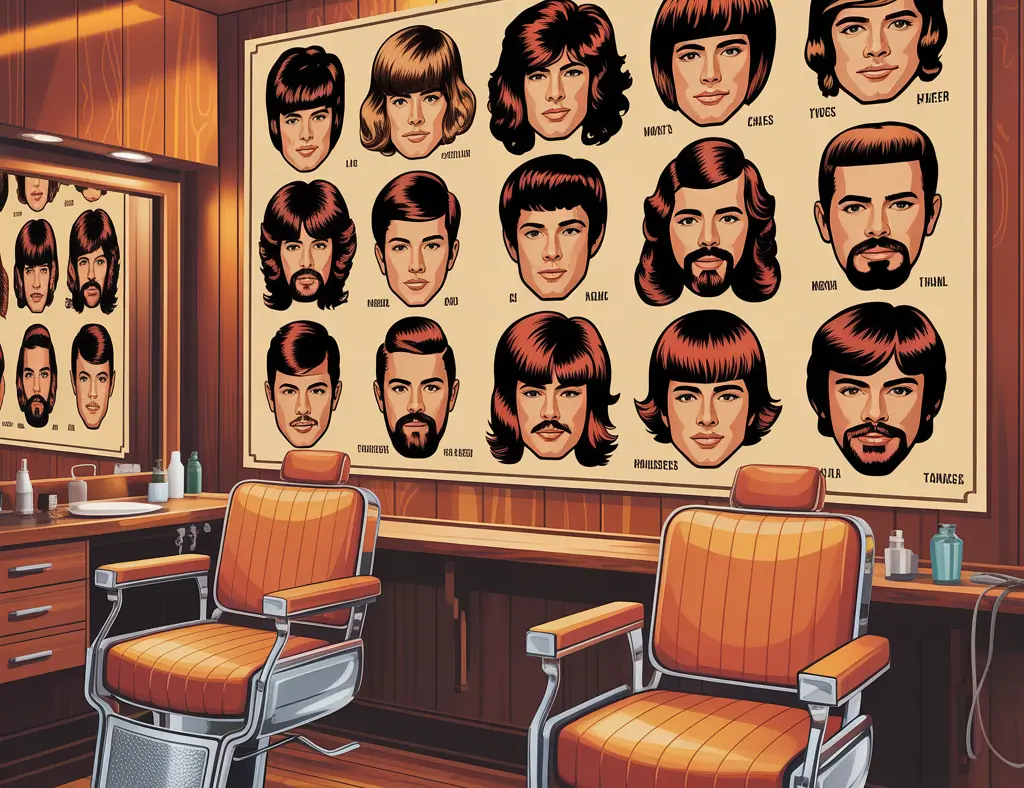
A 1970s barbershop chart is a visual and verbal reference a client or barber uses to identify specific retro hairstyles from the seventies. Think of it as a menu of vintage cuts — from the Afro to the feathered shag — complete with notes on length, texture, sideburns, and fade. For modern men searching “1970s men’s haircut guide” or “vintage barber chart for 70s styles,” this chart helps translate old-school photos into clear instructions your barber can execute.
Key 70s hairstyles (and how to ask for them)
Feathered Shag
Description: Layered, face-framing hair with lots of feathered texture—think Farrah Fawcett energy but tailored for men. Ideal for straight to wavy hair.
How to ask: Request long layers with face-framing feathering, light thinning through the ends, and blow-dry with a round brush to encourage the feathered flip.
Mullet / Modern Mullet
Description: Short on the top and sides, longer in the back. The 1970s mullet was more relaxed and less extreme than modern variations.
How to ask: Ask for short sides (not skin-tight), a bit of length on top for styling, and a longer cropped back. Specify a soft, blended transition if you want less contrast.
Afro
Description: Rounded, voluminous shape with consistent length. In the seventies the Afro was a bold cultural statement.
How to ask: Ask your barber for a rounded shape with even length all around; mention the desired diameter and whether you want a tapered neck.
Side-Parted Pompadour / Disco Sweep
Description: Slicked or brushed-back top with volume and a strong side part. Great for medium-thick hair and a dressier vibe.
How to ask: Request length on top for volume, a defined side part, and tapered sides. Use a medium-hold pomade to finish.
How to use a barbershop chart at your appointment
- Bring photos from multiple angles — front, side, and back.
- Point out specific features: length at the nape, sideburn thickness, and whether you want texture or blunt ends.
- Discuss maintenance: ask how often you’ll need trims to keep the shape.
- Ask for product recommendations that match your hair type (pomade, cream, sea-salt spray).
Style tips & outfit combinations to match your 1970s haircut
Hair and clothes work together. Here are outfit combinations that make each seventies haircut feel intentional, not costume-y.
Feathered Shag — Smart Casual, Elevated
- Top: Fine-gauge knit polo or an open-collar patterned shirt
- Bottom: Straight-leg corduroy trousers or tailored flares
- Shoes: Suede loafers or Chelsea boots
- Finish: Thin gold chain, vintage sunglasses
Mullet — Contemporary Edge
- Top: Graphic tee layered under a workwear jacket or denim shirt
- Bottom: Slim relaxed jeans or tapered cargo pants
- Shoes: Retro runners or chunky boots
- Finish: Minimal accessories — let the haircut do the talking
Afro — Bold & Refined
- Top: Patterned button-up or fitted knit sweater
- Bottom: Slim dress pants or tailored chinos
- Shoes: Leather loafers or desert boots
- Finish: Well-groomed beard or clean-shaven for contrast
Pompadour / Disco Sweep — Night Out Ready
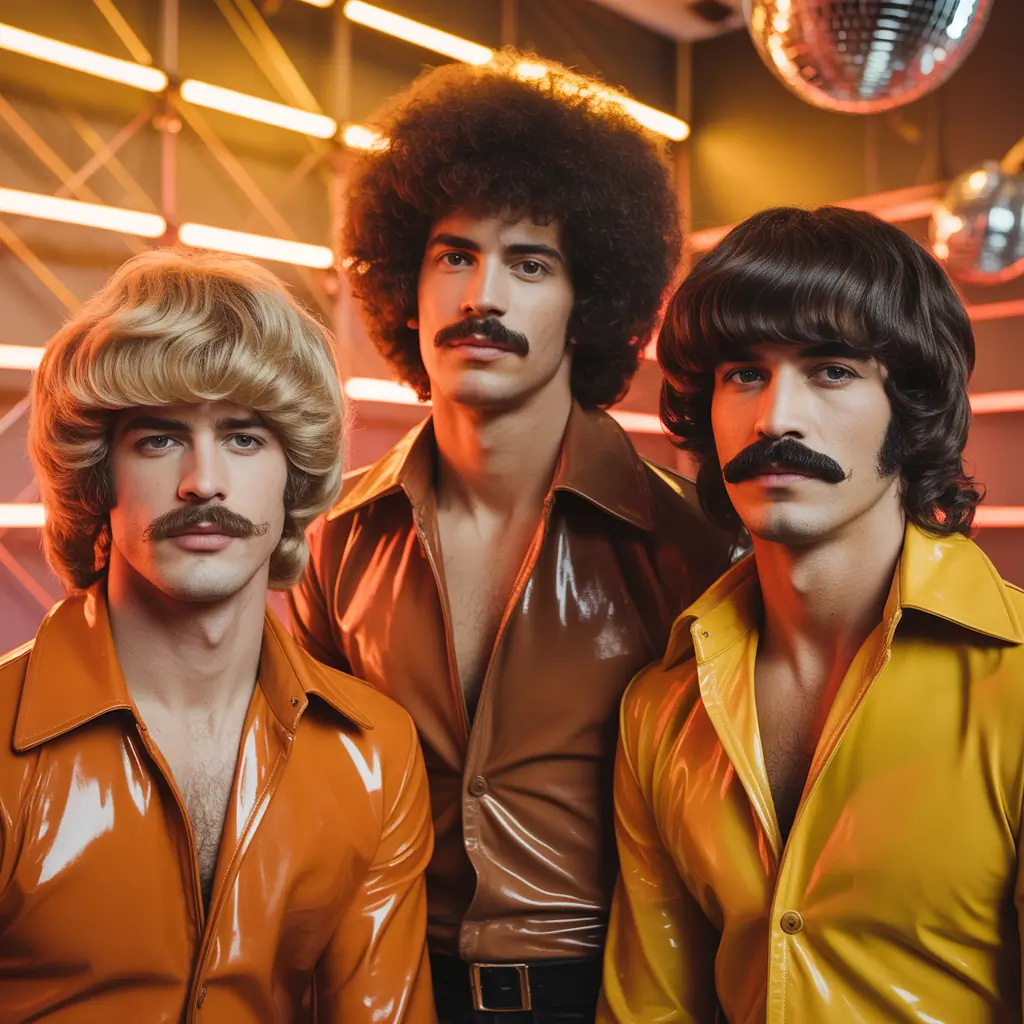
- Top: Satin or silk-like shirt with an open collar
- Bottom: Slim flare trousers or dark denim
- Shoes: Pointed leather boots or polished oxfords
- Finish: A dab of pomade for shine and hold
Maintenance & grooming for vintage 70s looks
To keep a 1970s cut looking current, focus on texture, shape, and product selection.
- Regular trims: Every 4–8 weeks depending on the style and how fast your hair grows.
- Products: Use lightweight creams for feathered textures, medium-hold pomades for pomps, and moisturizing creams or pick-and-shine balms for Afros.
- Tools: A round brush for feathering, a wide-tooth comb for voluminous styles, and a diffuser for defined waves.
- Beard & sideburns: The seventies loved prominent sideburns and well-shaped facial hair. Ask your barber to shape sideburns to match the haircut’s length and angle.
Using references and finding inspiration
When searching “retro hairstyles 1970s for men” or creating a vintage barber reference, mix era photos with modern adaptations so your barber understands the desired level of nostalgia versus contemporary wearability. If you want more on pairing hair and clothing, check out our Men’s Style Guide: 1970s or learn how to adapt vintage haircuts in our Vintage Haircuts 101 article.
Frequently Asked Questions
1. What should I bring to my barber when asking for a 1970s haircut?
Bring several clear photos from multiple angles, note your hair type (fine, medium, coarse), and mention how much daily styling you’re willing to do. A simple 1970s barbershop chart or list of desired features (length on top, tapered sides, sideburn thickness) helps avoid miscommunication.
2. Can modern barbers adapt 1970s styles without looking dated?
Absolutely. Good barbers will modernize proportions, soften contrasts, and adjust texture to suit contemporary lifestyles. Ask for a “modern mullet” or “updated feathered shag” to get a retro vibe that’s wearable today.
3. Which hair types work best for 70s hairstyles?
Most hair types can adapt. Wavy hair suits feathered shags and pomps; curly textures are perfect for Afros and rounded shapes; straighter hair can be layered and texturized. Discuss product and maintenance with your barber so the cut fits your daily routine. For grooming tips, see our Beard Grooming Tips post.
Conclusion
Whether you’re hunting for authenticity or a modern spin, a clear 1970s barbershop chart — combined with the right styling tips and outfit pairings — will get you the vintage look you want without the guesswork. Ready to transform your look? Bring this guide to your next appointment, save a few reference photos, and experiment with outfits that complement your cut. Want weekly style tips and deeper breakdowns of retro looks? Sign up for updates and explore our other guides to master the seventies aesthetic with confidence.